
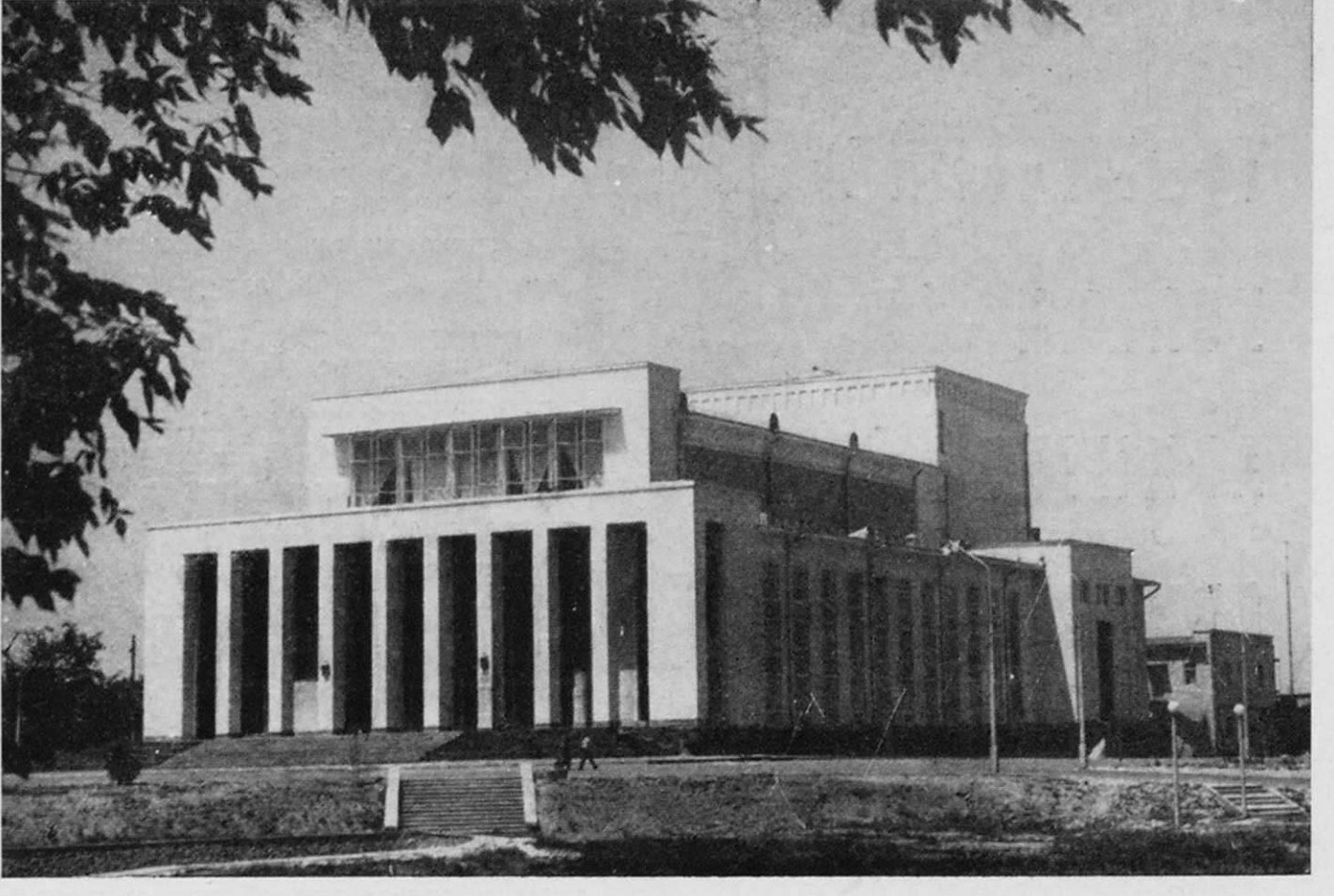
Hamid Alimjan Theatre (Samarkand Opera and Ballet Theater)
About the Object
A. Balaev
1964
Modernism
Университетский бульвар (бывший бульвар Горького), Самарканд
Theater
Gallery (2)

A Thousand Lamps
In the summer of 1963, a thousand-seat opera and ballet theater was already under construction in Samarkand, the second in the republic after Tashkent. It did not have a troupe yet. It was being assembled from graduates of the Tashkent Conservatory, theater and choreographic schools, and the backbone was provided by artists of the Khamid Alimjan Regional Theater of Musical Drama and Comedy. The result was, as they wrote at the time, the youngest opera company in the country. By the end of July 1964, the scaffolding was removed from the facade. The rehearsal room windows were filled with glass blocks, not smooth, but patterned: the sun fractured in the facets, the light in the hall was diffused, and coolness was maintained in the heat. In total, twenty thousand square meters of glass went into the stained glass windows, walls, and plinth. The plinth and the main staircase were faced with granite by Moscow metro builders. The four-hundred-square-meter stage was equipped with ten kilometers of metal cables and two freight elevators for scenery. Ventilation was installed under every seat, and there was no chandelier in the hall at all: it, expensive and cumbersome, was replaced by spotlights. The theater opened on October 29, 1964, and for the first time all a thousand lamps lit up in it. The name of Khamid Alimjan passed on to the new theater as well. That evening, seventeen people received honorary diplomas: a brigade leader of concrete workers, a parquet layer, an electric welder, construction director V. Kostovetsky, and project author A. Balaev. Composer Mukhtar Ashrafi became the director of the theater, and his opera "The Poet's Heart" was the first performance. A week later, the theater was described as a "snow-white cube" rising above the city next to the blue dome of Gur-Emir. Later, architectural historians noted in it "a certain austerity of forms" that does not prevent the appearance from being expressive.
AI translation · 🇬🇧 EN
📷 Театр оперы и балета в Самарканде, архитектор А. Балаев, 1964. «Архитектура СССР», 1967, № 9, с. 7
Rate this review:
The second theater on the boulevard
In the spring of 1976 on Gorky Boulevard, next to the opera house, a second theater was under construction: a new 750-seat building for the Khamid Alimdzhan Oblast Uzbek Drama Theater. The project was designed at the UzNIIPgradostroitelstvo institute by architects A. Balaev, the very same author of the opera house, V. Berezin, and D. Malibekov. A wide staircase rose two and a half meters to the entrance, the central portico was supported by rectangular pylons, the entire second floor was decorated with stylized stalactites, and the foyer was finished with ganch carving. The boulevard was meant to become a theatrical one. A year later, the city was promised the boulevard itself. A competition for its development was won by S. Sutyagin's group with the "Sun of Sogdiana" singing fountains composition: lighting, music, sculptures stretching from the opera and ballet theater to the drama theater under construction. At the same time, they were going to redesign the facades and interiors of the opera house itself. The theater was never opened. In December 1987, listing what Samarkand had lost since the early eighties, this was also mentioned: construction of the Alimdzhan Theater had been mothballed. In the summer of 1988, director T. Israilov wrote that the old theater building was in an emergency condition, while the new one had been mothballed "for twenty years already," and because of this, all the productions the troupe had worked on for years had left the stage. Today, the Khamid Alimdzhan Theater operates in the opera building that Balaev constructed in 1964.
AI translation · 🇬🇧 EN
Rate this review:
About the Object
A. Balaev
1964
Modernism
Университетский бульвар (бывший бульвар Горького), Самарканд
Theater