
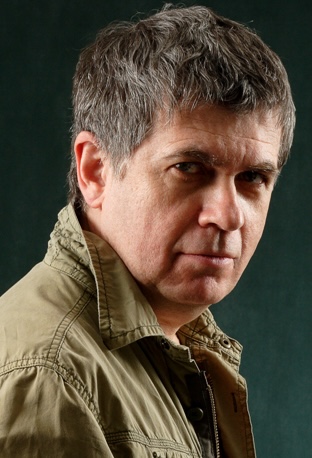
Mark Yakovlevich Weil
About the Object
Mark Yakovlevich Weil
1952
Other
Улица Пахтакорская, 5, Ташкент (Дом молодёжи, театр «Ильхом»)
Historic Personality
Gallery (1)

Mark Weil: Thirty-one Years in the Pakhtakorskaya Basement
The entrance to the Ilkhom Theater leads down into the basement of the Youth House. From here, from 1976 until September 2007, Mark Weil worked - the man thanks to whom this building is known far beyond Tashkent. He was a local. Born in Tashkent in 1952 into a military family; his mother graduated from the Kiev Theater Institute. He himself graduated from the directing department of the Tashkent Theater and Art Institute and almost immediately conceived the impossible: his own theater, not subordinate to any culture department. A coincidence regarding the building helped. In the design of the Youth House, as the magazine Architecture and Construction of Uzbekistan listed in 1978, among two dozen rooms there was a theater studio with a hall for one hundred spectators. Club and circle work in the new building was sluggish, the rooms stood half empty, and Weil proposed occupying them with his studio. As architectural historian Boris Chukhovich writes, Rakhim Kariev, the eldest figure of the Uzbek theater who treated the venture with enthusiasm, vouched for him. Instead of the inactive circles, the Experimental Studio of Creative Youth appeared in the building, which included actors, artists, architects, musicians, and theater critics. Thus the theater acquired a legal shell, and the country its first non-state theater. In 1977, the group of Richard Bleze, the author of the building itself, remodeled the basement and foyer into a theater: a removable stage construction, an amphitheater for seats, and acoustic wall and ceiling cladding. From this moment on, the hall could be reassembled - spectators could sit in a regular stalls arrangement, surround the stage in a semicircle, or watch from above, from the second level. The first performance played in this hall was Duck Hunting in 1978. Weil wrote about his generation as follows: 'In the 70s, we were perhaps united by only one thing: the desire to express the views of our generation and speak the truth as we understood it.' The hero of his performances lived in a double morality: he thought one thing, said what was prescribed, and acted a third way. In the nineties, he crossed the European performance tradition, stemming from Brecht, Meyerhold, and Vakhtangov, with Uzbek folk theater and its improvisational eccentricity. In 1995, he opened a school of dramatic art attached to the theater. His latest works, and above all The Flights of Mashrab in 2006, were already read as a political pamphlet. On the night of September 7, 2007, Mark Weil was murdered in the entryway of his own home. The theater remained and bears his name. The foyer and the basement on Pakhtakorskaya have remained the center of unofficial musical and artistic life in the city all this time, and when the building owners intended to evict the theater for reconstruction in 2020, a rising wave of public protests stopped them.
AI translation · 🇬🇧 EN
Rate this review:
Nearby and related
Close by in Tashkent
About the Object
Mark Yakovlevich Weil
1952
Other
Улица Пахтакорская, 5, Ташкент (Дом молодёжи, театр «Ильхом»)
Historic Personality