
Auditorium Parco della Musica Ennio Morricone
About the Object
Renzo Piano
2002
Contemporary Architecture
Viale Pietro de Coubertin 30, Roma
Public Building
Gallery (1)

Three beetles around an antique theater, and a villa that delayed everything by a year
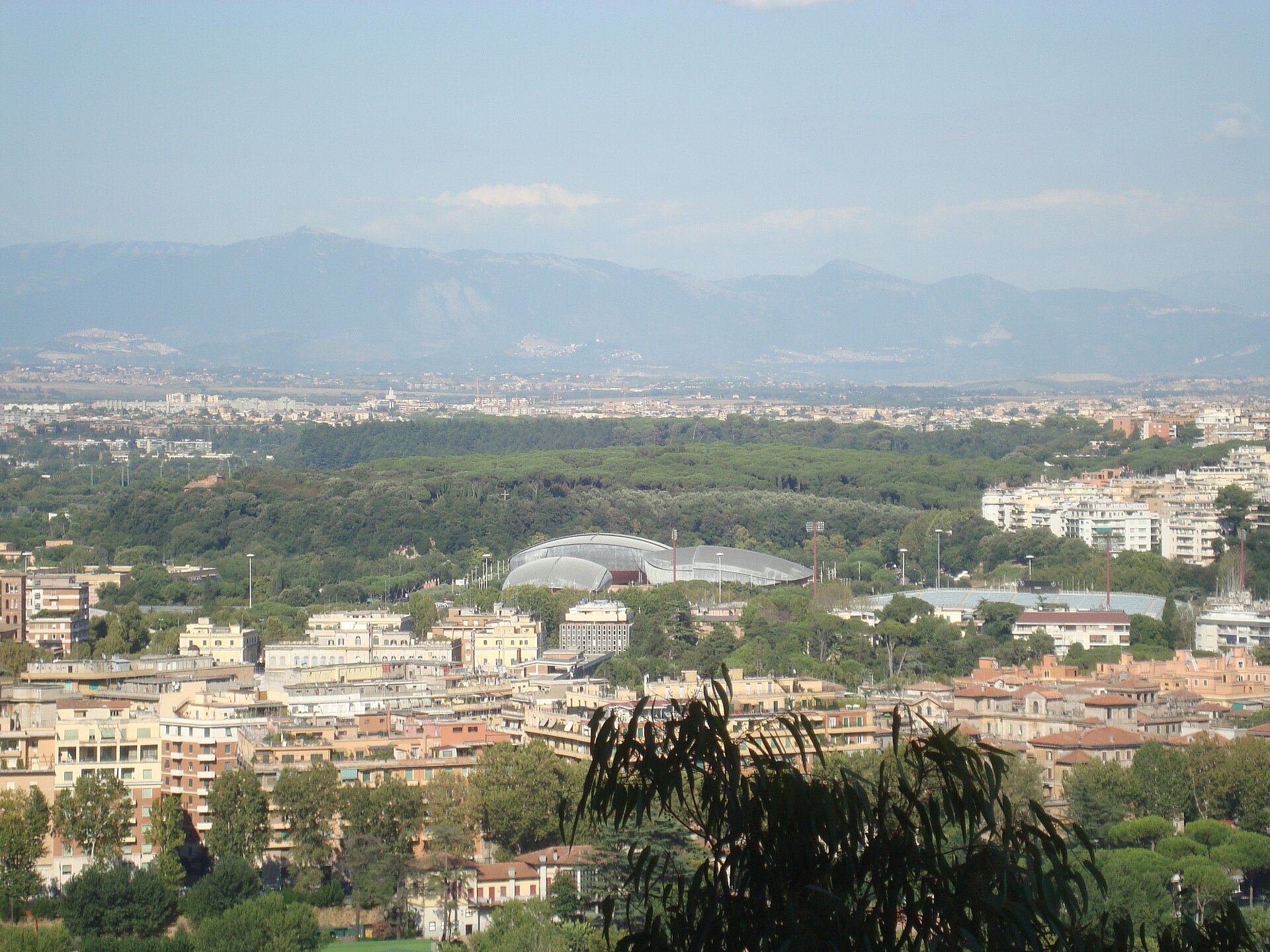
From afar it looks like three giant shells of lead and wood lying on the ground. The Romans actually call them beetles; "turtles", "drops", and "computer mice" are also in use. Inside each shell is a concert hall, and between them, in the middle, lies an open bowl under the sky. Let us start with the bowl, because it explains everything else. It is called the cavea - like in an ancient theater, and is arranged the same way: fan-shaped around the central square. Renzo Piano, who built this complex, acted here in a Roman way: he made something new, but using an old scheme that is over two thousand years old. Now about the halls. There are three of them, and they are of different sizes not on a whim, but by purpose: Sala Santa Cecilia with almost twenty-eight hundred seats for a large orchestra, Sala Sinopoli for twelve hundred, and Sala Petrassi for seven hundred, for chamber music and theater. The halls are named in memory of conductor Giuseppe Sinopoli and composer Goffredo Petrassi. The separate bodies do not stand close together: air passes between them and the noise of the city does not interfere from within. And here is the main story of this place. When digging the foundation pit, they came across the foundations of a villa and an olive oil press from the 6th century BC. In another city, this might have become a disaster. Here the project was redrawn: Piano integrated the excavation into the complex and arranged a small museum inside for what was found. Construction was delayed by a year because of this. The Auditorium was opened on December 21, 2002. Urban planner Daniel Solomon notes that this complex - with shops, restaurants, and the open cavea - made the former Olympic Village a much more central place in capital life than it used to be. And the last thing for which it is worth walking from here. Ten minutes away is Pier Luigi Nervi's Palazzetto dello Sport with its prefabricated dome from 1957, and a bit further is Zaha Hadid's MAXXI, opened in 2010. Three buildings, half a century between the extremes, and all three are made by structure, not decoration. This is the best walk through modern Rome that there is.
AI translation · 🇬🇧 EN
Rate this review:
Nearby and related
Close by in Rome
About the Object
Renzo Piano
2002
Contemporary Architecture
Viale Pietro de Coubertin 30, Roma
Public Building