
MAXXI - National Museum of 21st Century Arts
About the Object
Zaha Hadid
2010
Contemporary Architecture
Via Guido Reni 4A, Flaminio, Roma
Museum
Gallery (2)

A museum built in barracks that feels like a flow itself
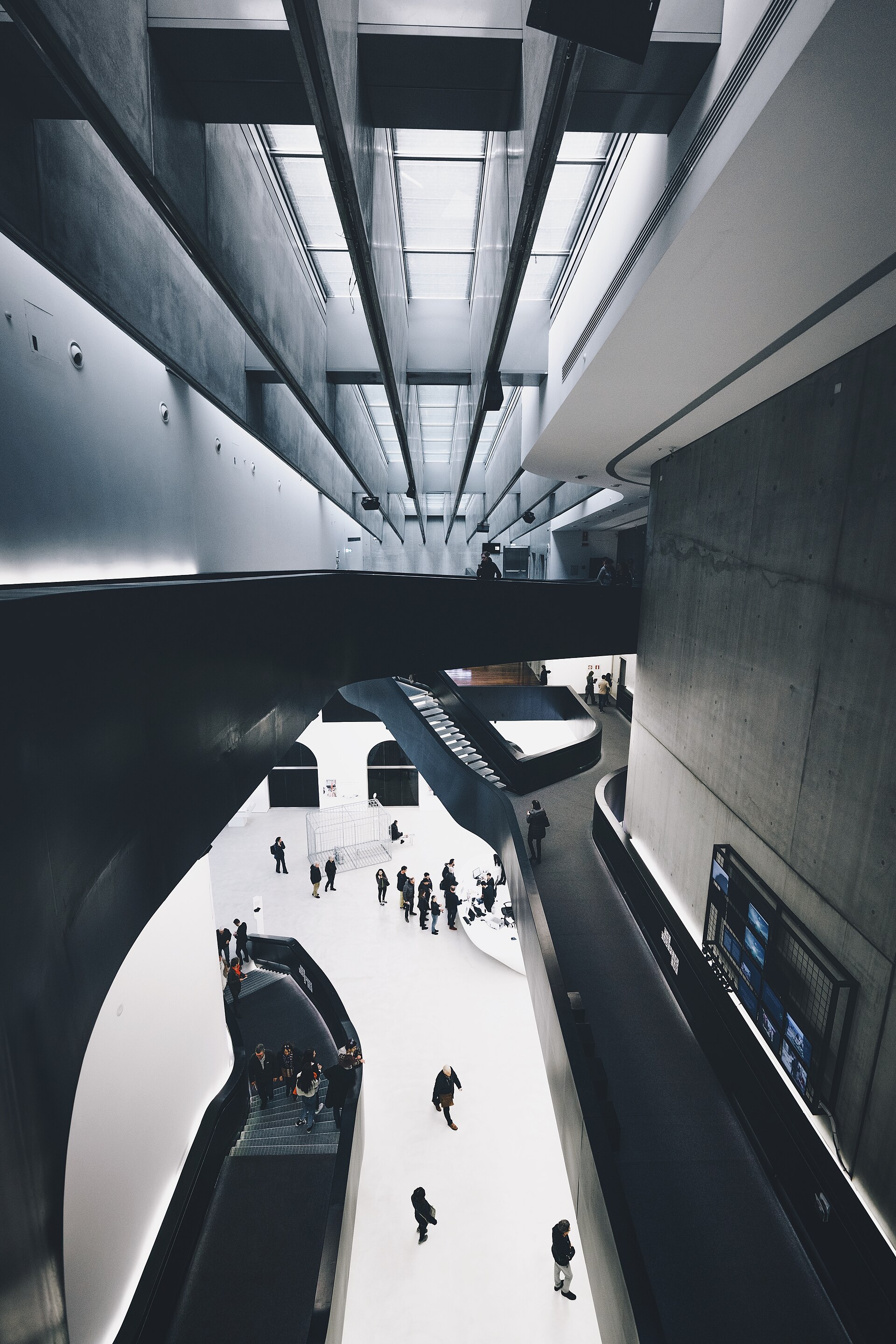
In Rome, almost everything you see is centuries older than you. Here, it is the other way around: the building opened in 2010 and looks as though it was poured rather than built. The main thing is inside, in the grand hall. Black staircases cut diagonally through the white space, curving as they go; concrete beams stretch overhead with light slits between them; the walls do not so much stand as flow past. The journey through the museum is not room by room, but one continuous flow, and getting lost in it is both easy and enjoyable. Let us start with what was here before. The Flaminio district is a former industrial and military outskirts. A car factory founded in 1905 turned into a royal arms factory during the First World War, surrounded by barracks and workshops. The museum is built on the site of one of them - the Montello barracks, and parts of the old structures are integrated into it. In other words, Rome acted in its own way here too: it did not clear the site completely, but grew the new out of the old. The design competition was announced in 1998, and it was won by Zaha Hadid, an architect whose buildings are recognized precisely for this fluidity of form. Construction took over a decade. In the year it opened, the building received the Stirling Prize from the Royal Institute of British Architects, the top British award in architecture. What is worth doing inside, besides the exhibitions themselves. From the upper level, looking down, you can see the interweaving of stairs and bridges: the halls here are not boxes, but riverbeds. Pay attention to the light - it comes from above, through long slits between the beams, and changes throughout the day, so the exact same spot looks different in the morning and the evening. And finally, why it is useful to remember this address in full. In the very same district stand Pier Luigi Nervi's Palazzetto dello Sport from 1957 with its precast dome and Renzo Piano's Auditorium from 2002. Three buildings, half a century between the extremes, and all three are about structure, not decoration. In Rome, such neighborhood is rarer than baroque.
AI translation · 🇬🇧 EN
📷 Wikimedia Commons · Francisco Anzola · CC BY 2.0 · https://commons.wikimedia.org/wiki/File:Inside_MAXXI_(26876589823).jpg
Rate this review:
Nearby and related
Close by in Rome
About the Object
Zaha Hadid
2010
Contemporary Architecture
Via Guido Reni 4A, Flaminio, Roma
Museum