
Basilica di Santa Maria del Popolo
Всемирное наследие ЮНЕСКОAbout the Object
The architect of the Renaissance remodeling is not established (Andrea Bregno is often named); choir - Donato Bramante; Baroque alterations - Gian Lorenzo Bernini
1477
Renaissance
Piazza del Popolo 12, Roma
Religious Structure
Gallery (1)

The church where Bramante, Raphael, Bernini, and Caravaggio worked. Free admission
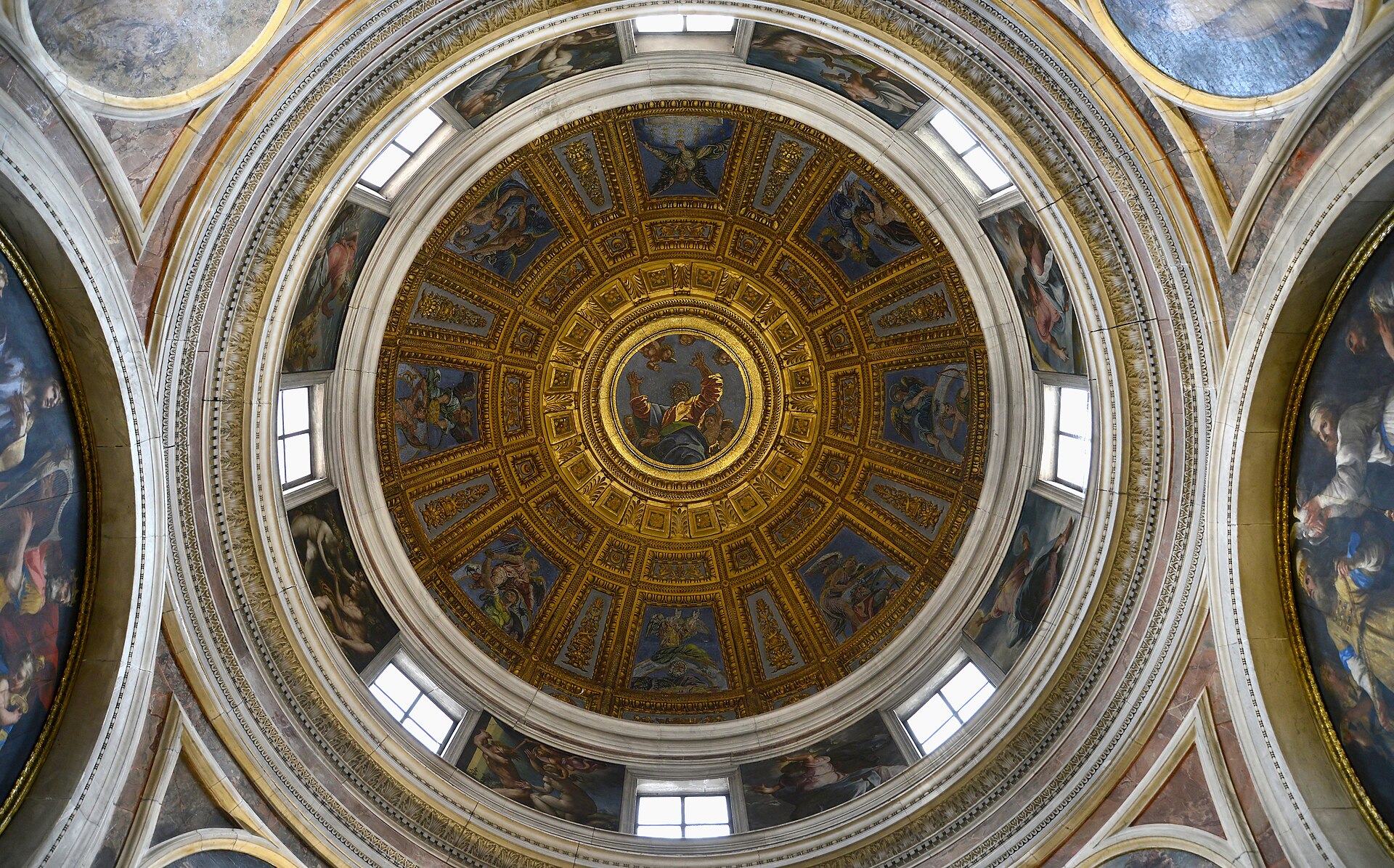
If someone set out to gather in a single building everyone who defines Roman art, they would end up with Santa Maria del Popolo. And this happened not by design, but on its own - the church stands by the northern gate, through which everyone entered Rome for centuries, and every pope felt it necessary to add something to it. A church on this site appeared in 1099, and the current building is one of the first Renaissance structures in Rome, built in 1472-1477 by commission of Pope Sixtus IV. Later it was expanded four times, and every layer is visible. Pinturicchio. Shortly after the death of Sixtus in 1484, Pinturicchio and his students painted two chapels for the della Rovere family. In the first on the right is the Nativity of 1490, where the stable is built against the base of an ancient column - the artist simply painted what he saw around him, Christian life amidst Roman ruins. Bramante. In 1503, the nephew of Sixtus became Pope Julius II and commissioned Bramante to build a new choir. Pinturicchio was called again to paint the vaults with sibyls and apostles. Raphael and Bernini in the same chapel. In 1513, Raphael designed the Chigi Chapel for the wealthiest banker Agostino Chigi, the second on the left. There are pyramid-shaped tombs there, and a mosaic in the dome: God holds the signs of the zodiac, and this is the patron's horoscope. The sacred and the pagan in one room, and no one objected. Raphael died before finishing, and Bernini brought the chapel to completion, adding statues of Daniel and Habakkuk. Caravaggio. In the Cerasi Chapel, to the left of the altar, hang two canvases from 1601: The Conversion of Saul and The Crucifixion of Saint Peter. In the first, almost the entire picture is taken up by the rump of a horse, and the man who has fallen to the ground lies at the bottom, flooded with light from nowhere. In the second, three workmen are raising the cross with the apostle, and you can see how physically difficult it is. Neither heroics nor posing - just labor and weight. Between Pinturicchio and Caravaggio here, there are exactly one hundred and ten years, and they hang twenty paces apart. They charge nothing for admission. Practicalities. The church is active, it has its own hours and there is a midday break, check before you go. Metro - Flaminio station, exit directly onto the square.
AI translation · 🇬🇧 EN
Rate this review:
Nearby and related
By the same architect
Close by in Rome
About the Object
The architect of the Renaissance remodeling is not established (Andrea Bregno is often named); choir - Donato Bramante; Baroque alterations - Gian Lorenzo Bernini
1477
Renaissance
Piazza del Popolo 12, Roma
Religious Structure