
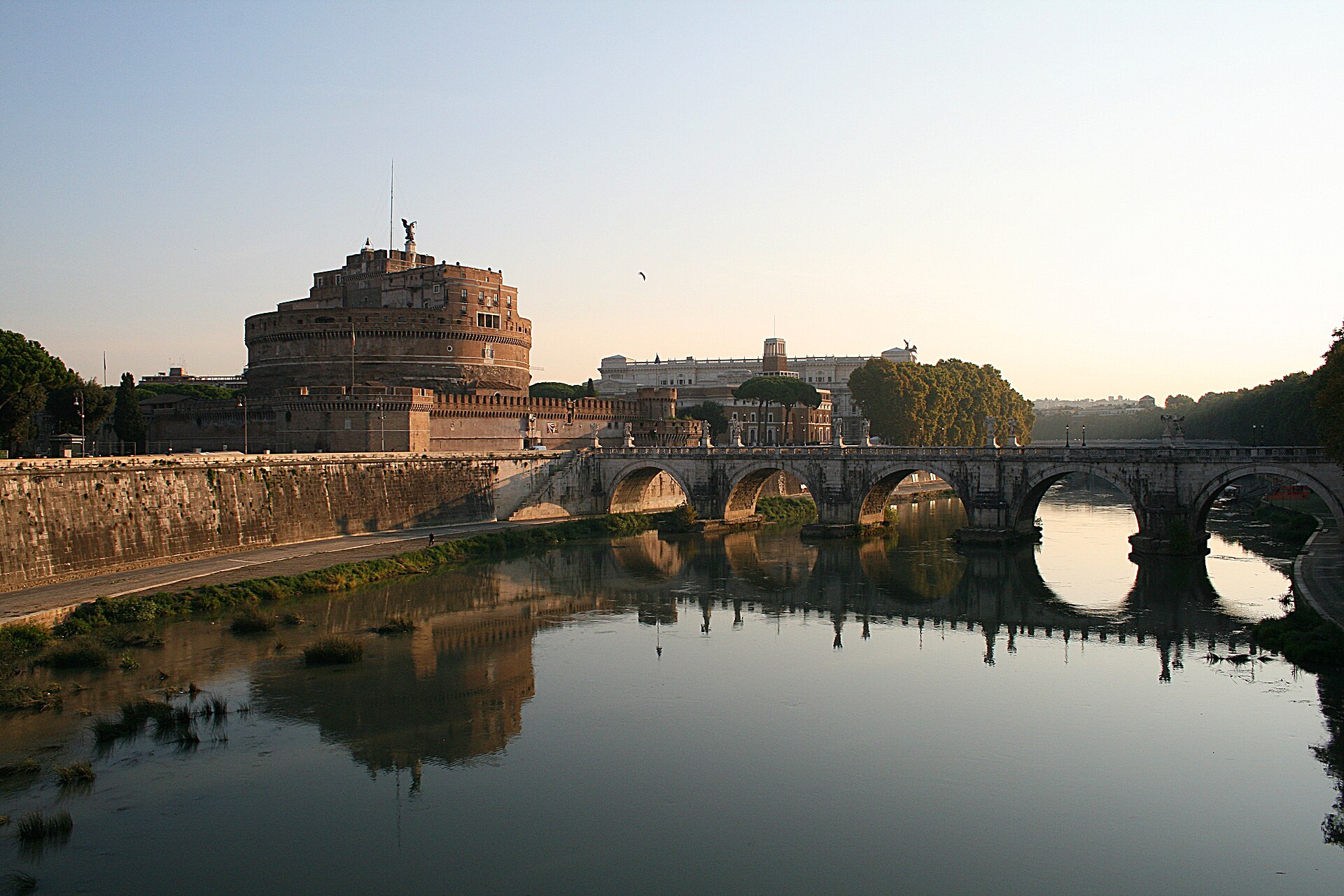
Ponte Sant'Angelo and Bernini's Angels
Всемирное наследие ЮНЕСКОAbout the Object
Gian Lorenzo Bernini (concept of the angels); the bridge was built under Emperor Hadrian
134
Baroque
Ponte Sant'Angelo, Roma
Bridge
Gallery (1)

Ten angels, two fakes, and the bridge to the scaffold
The bridge you are standing on is older than everything standing on it. It was built by the Emperor Hadrian, finished in 134 AD, and built for one sole purpose: to reach his own mausoleum on the other bank. The emperor was building a road to his grave, and it turned out to be the main crossing to the Vatican, walked by pilgrims for a millennium and a half. Walking across it used to be dangerous. In the jubilee year of 1450, a crush happened on the bridge: the railings gave way under the crowd, people tumbled into the Tiber, and many drowned. And for several centuries after that, the bodies of the executed were put on display here-so that everyone walking to Saint Peter's would first pass by the hanged. Now look at the angels. There are ten of them, five on each side, and each holds a different object: a column, whips, a crown of thorns, nails, a lance, a sponge, a cross, an inscription plaque. These are the Instruments of the Passion-everything Christ was tortured and executed with, distributed among the figures like lines in a poem. You walk across the bridge and traverse the history of the execution step by step, to reach the basilica built over the tomb of the executed apostle. Pope Clement IX commissioned them in the late 1660s, and the entire concept belongs to Bernini-he was nearly seventy. The angels were carved by his pupils. And this is where the story begins that makes this site stand out on the map. Bernini carved two of the angels with his own hands: the one with the plaque and the one with the crown of thorns. When they were brought in, the Pope took one look and refused to let them go onto the bridge. They were too good to stand out in the rain and among the pigeons. He ordered copies to be made for the bridge and kept the originals. The copy of the "Angel with the Plaque," the one standing right here, was carved by Bernini's pupil Giulio Cartari. So if you want to see the real Bernini, you won't find him on the bridge. Both originals are in the church of Sant'Andrea delle Fratte, twenty minutes away, and you can examine them up close there, without the river or the crowds. What I like about this story isn't that there are copies on the bridge. What I like is that the decision was made in the exact same way such decisions are made today: the object turned out to be too valuable for the very place it was made for. The bridge got stand-ins, and the masterpieces went indoors. The only difference is that nowadays museums do that, whereas back then, it was the Pope personally.
AI translation · 🇬🇧 EN
Rate this review:
Nearby and related
By the same architect
Close by in Rome
About the Object
Gian Lorenzo Bernini (concept of the angels); the bridge was built under Emperor Hadrian
134
Baroque
Ponte Sant'Angelo, Roma
Bridge