
Villa Celimontana
Всемирное наследие ЮНЕСКОAbout the Object
1572
Renaissance
Piazza della Navicella / Via della Navicella, Roma
Park
Gallery (1)

A garden with an Egyptian obelisk and almost nobody around
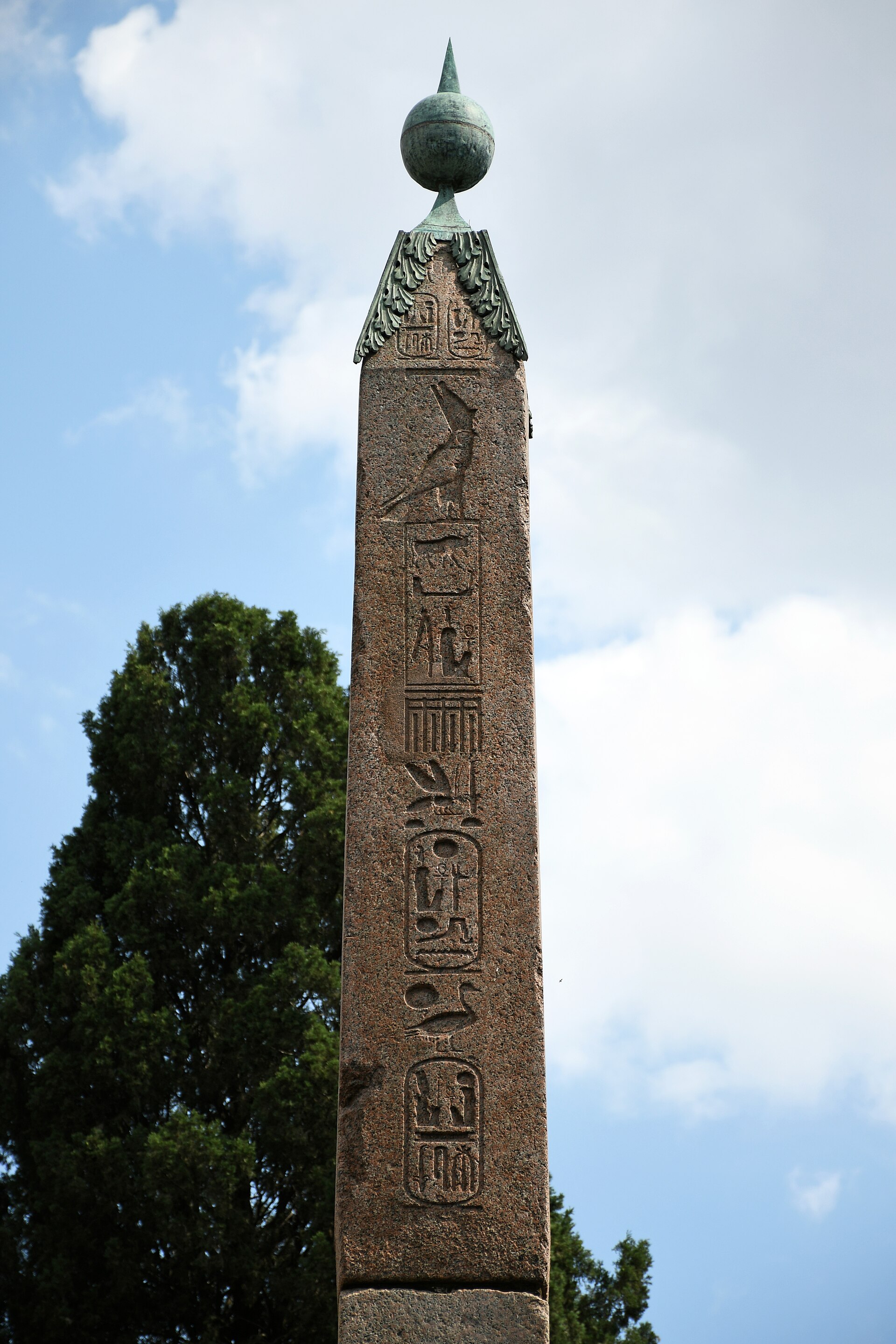
Between the Colosseum and the Baths of Caracalla lies the Caelian Hill, featuring eleven hectares where you will most likely not meet a single soul. This is strange, because it is a ten-minute uphill walk from the Colosseum, yet tourists do not make it here. It all started with vineyards. In the mid-sixteenth century, Giacomo Mattei bought up plots around the church of Santa Maria in Domnica, and his son-in-law Ciriaco Mattei transformed the working vineyard into a pleasure garden around 1572: statues, fountains, nymphaeums, a hanging garden, an area shaped like an ancient circus. The house, or casino, began construction after 1577. The main thing Ciriaco acquired for the garden still stands there today. It is an Egyptian obelisk, once brought from Heliopolis and set up in ancient Rome at the Temple of Isis. Since the fourteenth century, it had lain near Aracoeli on the Capitoline Hill until Ciriaco begged it from the city council. The obelisk is made of two pieces, and the hieroglyphs of Ramesses II can be read on the upper one, meaning the stone is thirty-three centuries old, and for the past four hundred years it has stood in a private garden that is now free to enter. This garden also had its own tradition of hospitality. The Matteis opened the park to the public on the day of the visitation of the seven churches, a pilgrimage established by Philip Neri in 1552. Romans walked from Chiesa Nuova past all the major basilicas, and at Villa Mattei they were given bread, wine, sausage, cheese, an egg, and two apples. Just from this set of food, you can tell how long that procession lasted. The male line of the Matteis died out in the early nineteenth century; afterwards the villa passed from hand to hand, belonging at times to Austria and Spain, and after the First World War the state confiscated it from its German owners. Since 1926, the Italian Geographical Society has been housed in the main building itself, and the park has been municipal and open to everyone since 1928. What is here today: pine trees, shade, straight avenues, a children's playground with swings, and an almost complete absence of people. In summer, a jazz festival takes place in the park. For a stroll with a stroller, this is arguably the calmest spot in central Rome, and at the same time the only one where an obelisk of Ramesses stands between the swings and a bench.
AI translation · 🇬🇧 EN
Rate this review:
Nearby and related
Close by in Rome
About the Object
1572
Renaissance
Piazza della Navicella / Via della Navicella, Roma
Park