
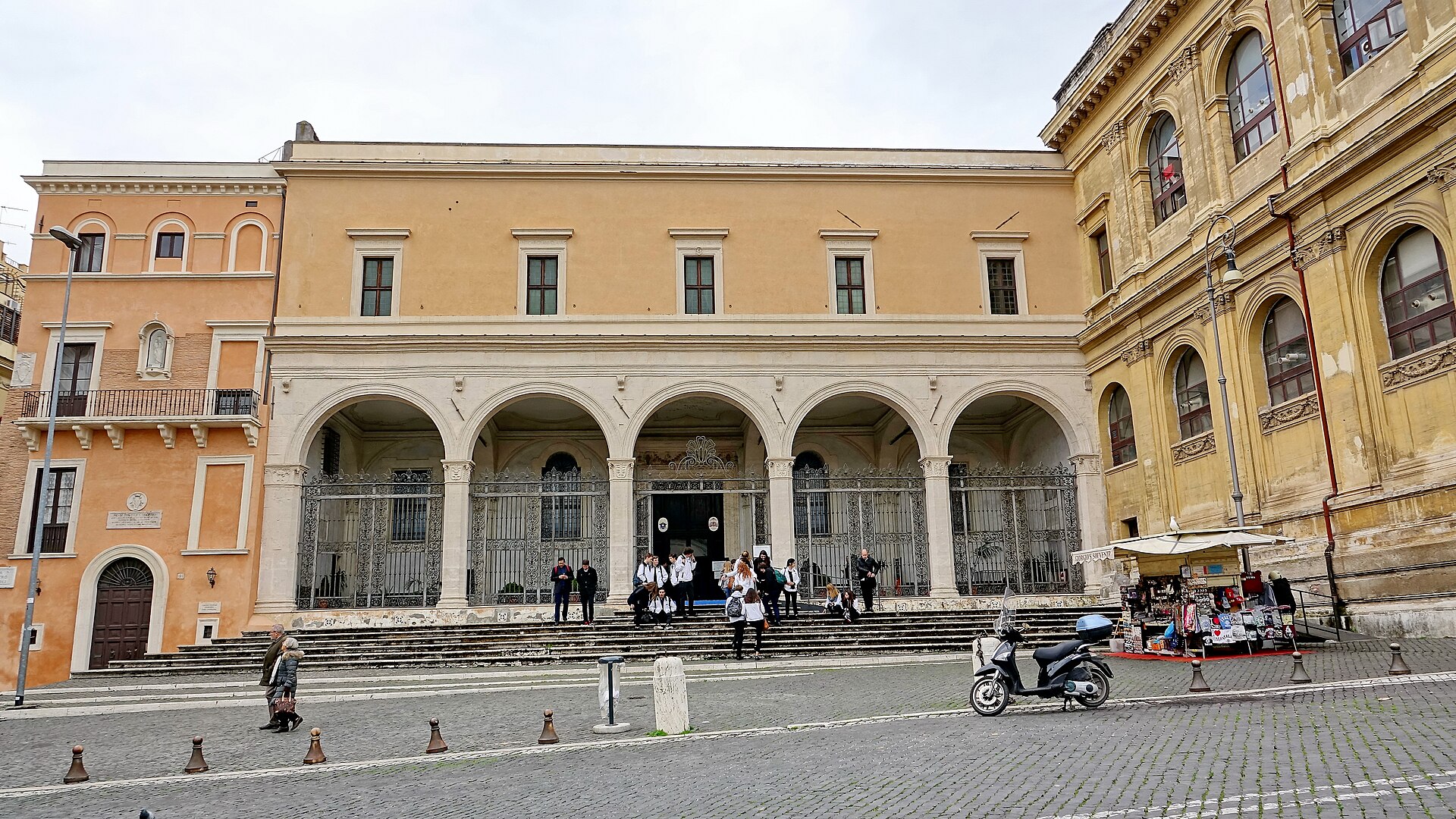
Basilica di San Pietro in Vincoli
Всемирное наследие ЮНЕСКОAbout the Object
Unknown; portico c. 1475, remodeling under Cardinal Giuliano della Rovere
439
Early Christian
Piazza di San Pietro in Vincoli 4a, Roma
Religious Structure
Gallery (2)

Forty years, forty figures and one Moses: the tomb that never was
From the Colosseum, a flight of stairs goes up, wedged between houses, and leads to a quiet square, of which there are hundreds in Rome. The church on it boasts nothing: five simple portico arches, a wall without a single sculpture. Inside, too, nothing special at first - a wide hall, twenty antique columns, light from high windows. The church was built precisely for this hall. In the middle of the 5th century, the chains with which the Apostle Peter was allegedly bound were placed here. One was brought from Jerusalem, the other, legend says, remained from his Roman imprisonment in the Mamertine Prison, and when they were brought close to each other, they grew together. The chains lie under the main altar, in a casket behind bronze doors, and from them the church received its name: vincoli means - fetters. But people do not come here for the chains. The whole point is the right wall. There sits a man with a stone beard descending to his knees. He is turned three-quarters and looks somewhere past you. This is Michelangelo's Moses, about two and a half meters tall. And what he is embedded in is the remainder of the unluckiest commission in architectural history. In 1505, Pope Julius II called upon the thirty-year-old Michelangelo and commissioned a tomb for himself. Not a slab and not a niche: a freestanding three-tier structure, almost eleven by seven meters, with forty statues larger than human size on all four sides. Essentially a small building inside a large one. It was supposed to stand in St. Peter's Basilica. Michelangelo spent eight months in Carrara choosing marble. While he was choosing, the pope got carried away with something else: it was decided to demolish the old St. Peter's Basilica and build a new one. There was no money for two grandiose undertakings at once, and the tomb was postponed. Then forty years of the same thing. The pope dies in 1513, the heirs sign a new contract, and the tomb changes from freestanding to wall-mounted. In 1516, it is squeezed down once more. Meanwhile, Michelangelo paints the Sistine Chapel, then returns to marble, then is taken away to the Last Judgment. In 1532, a contract is signed according to which the monument moves from St. Peter's Basilica here, to the parish church on the hill. They finished in 1545, when the author was seventy. Now look at what is in front of you once more. Out of four sides, only one remains. Out of forty figures, six niches. With his own hand, Michelangelo made three here: Moses and two women on the sides, Rachel and Leah, the contemplative life and the active life. The rest were hacked out by assistants. Two Slaves, which he managed to finish for the first design, stand in the Louvre, another four, abandoned unfinished, in the Florentine Academy, next to David. And the last thing why it is worth coming here. Julius II is not here. The pope was buried in St. Peter's Basilica, next to his uncle, under the floor, without any monument. The tomb for which marble was cut in Carrara for forty years stands empty in a foreign church, and Moses sits in it, whom people come to see from all over the world. Michelangelo himself called this story the tragedy of the tomb and wrote that he poured his whole youth into it.
AI translation · 🇬🇧 EN
📷 Wikimedia Commons · Richard Mortel · CC BY 2.0 · https://commons.wikimedia.org/wiki/File:Michelangelo%2C_Tomb_of_Pope_Julius_II%2C_1513%E2%80%9315%3B_in_San_Pietro_in_Vincoli%2C_Rome_(2).jpg
Rate this review:
Nearby and related
By the same architect
Close by in Rome
About the Object
Unknown; portico c. 1475, remodeling under Cardinal Giuliano della Rovere
439
Early Christian
Piazza di San Pietro in Vincoli 4a, Roma
Religious Structure