
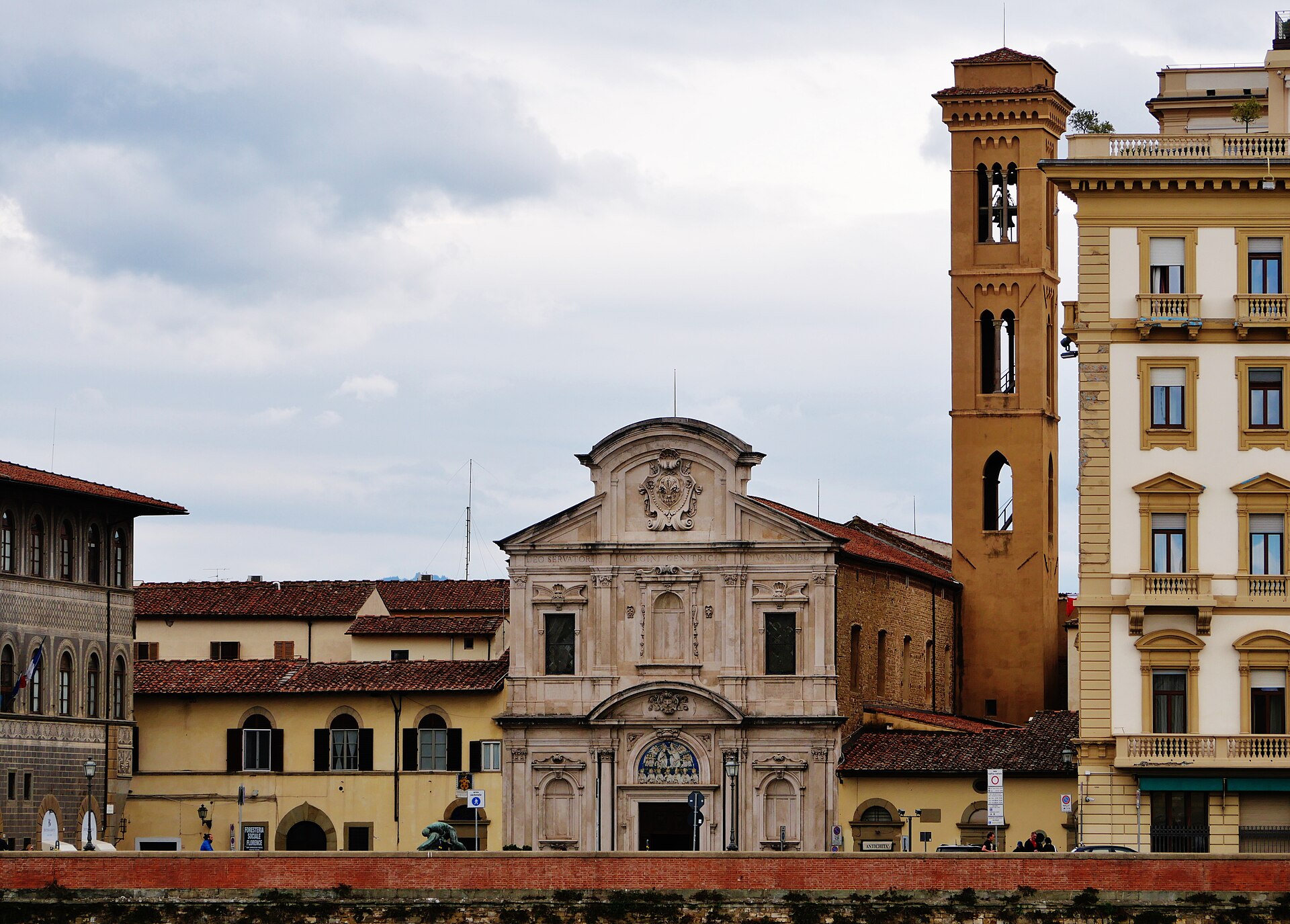
Chiesa di San Salvatore in Ognissanti
Всемирное наследие ЮНЕСКОAbout the Object
Matteo Nigetti
1637
Baroque
Borgo Ognissanti 42, Firenze
Religious Structure
Gallery (1)

The Navigator's Parish Church Where You Can See Botticelli for Free
Ognissanti stands on the Arno embankment, away from the tourist trail, and mostly locals drop by. Admission is free, which is one of the few places in Florence where it has stayed that way. The first thing to know, you will realize even before entering. The facade here is Baroque, and for Florence this is a rarity. It was built in 1637 based on a design by Matteo Nigetti from pietra serena, a local gray stone, in a restrained Florentine Baroque style, and in 1872 it was rebuilt in travertine and crowned with a large city coat of arms. Florence is not a Baroque city at all, it remained Renaissance, and therefore such a facade reads like a foreign accent in familiar speech. Inside, there are two reasons to stop. First. This was the parish church of the Vespucci family. The very lineage from which the navigator Amerigo Vespucci came, after whom an entire continent was named. And he is here: the young Amerigo is depicted in Ghirlandaio's fresco "Madonna of Mercy" from 1472, in the second chapel on the right. That is, a man whose name is borne by half the world is painted as a child on the wall of a parish church, among neighborhood acquaintances. Second. Sandro Botticelli is buried here. The tomb is in the chapel of San Pietro d'Alcantara in the right transept, and it is marked by a slab with the coat of arms of the Filipepi family, because Filipepi is his real surname. No museum framing, just a slab in the floor of a parish church. Plus, there is a wooden crucifix by Giotto hanging in the church, and in the refectory of the neighboring monastery, between two courtyards, is Ghirlandaio's "Last Supper" from 1480, a four by eight meter fresco. Practical advice, and you need to read this before going. The church is closed one day a week, and sources disagree on which one: some say Tuesday, others say Wednesday. During the day there is usually a break for a couple of hours. The refectory with the "Last Supper" is open on a very narrow schedule, in the mornings and not every day. So drop by on your way rather than making a special trip, and do not get upset if the refectory is closed - the church itself is well worth it.
AI translation · 🇬🇧 EN
Rate this review:
Nearby and related
Close by in Florence
About the Object
Matteo Nigetti
1637
Baroque
Borgo Ognissanti 42, Firenze
Religious Structure