
Michelozzo di Bartolommeo
About the Object
Michelozzo di Bartolommeo
1396
Other
Via Camillo Cavour 3, Firenze
Historic Personality
Gallery (1)

The Architect Chosen Over Brunelleschi - And They Weren't Wrong
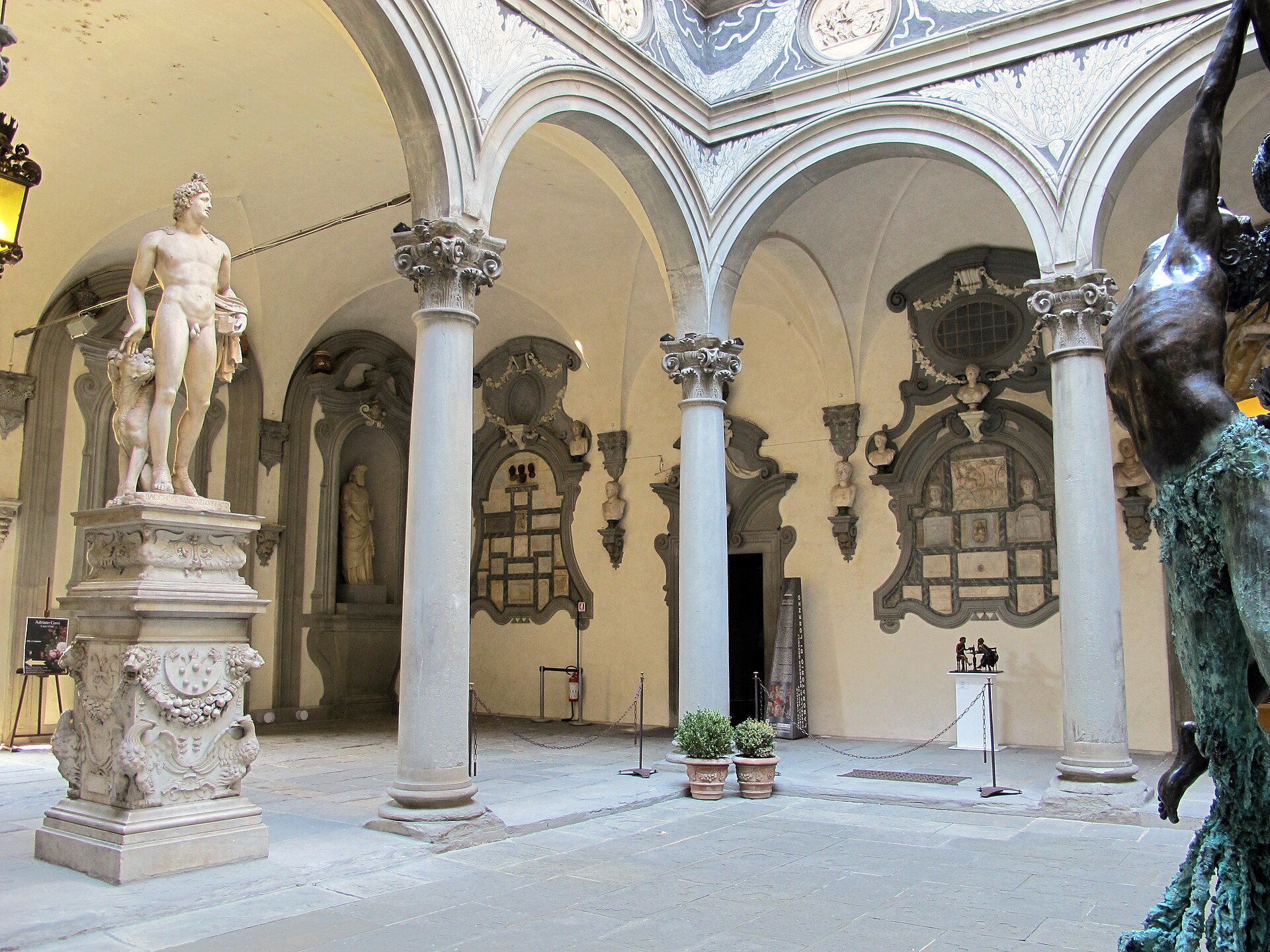
You stand before the Palazzo Medici, and this building explains its creator's career better than any biography. Michelozzo di Bartolomeo is the man in Florence who was regularly put in places where Brunelleschi had been before him. It all started with sculpture. In the early 1420s, he worked alongside Donatello: together they created the tomb of Baldassarre Cossa, antipope John XXIII, in the Baptistery-the only tomb in there, because after it, no one else was buried in the Baptistery. The bronze figure of the deceased on a bier is Donatello's work; the marble architecture around it is joint, and historians still divide the roles differently. Then came the patron who defined everything else. Cosimo de' Medici was sent into exile in 1433 by envious rivals, returned a victor a year later, and from that moment on, the city practically belonged to him. He began building immediately and on a massive scale: in 1437, the remodeling of the San Marco monastery, where Dominicans from Fiesole moved at his invitation, and right after that, his own palace. Michelozzo was the architect in both cases. DK calls him Cosimo's favorite architect, and that is no exaggeration: San Marco was built with Medici money, and Cosimo arranged a cell for himself there next to the library-not just for prayer, but for studying. What happened to Brunelleschi is important here. He never ended up working for Cosimo. The commission for the palace was first discussed with him, but the design was deemed too luxurious and given to Michelozzo; the altarpiece of Santissima Annunziata was also commissioned from Brunelleschi and then given to another. After 1434, the cathedral construction site remained virtually the only major project where Filippo still had control. Michelozzo was not an accidental replacement-he was a different type of master: someone who knew how to work with a private patron. And in 1446, immediately after Brunelleschi's death, Michelozzo took his place as well, becoming the capomaestro of the cathedral. Now look into the courtyard of the palazzo, if it is open. The square courtyard with its light arcade is an almost exact copy of the loggia of the Ospedale degli Innocenti, meaning Brunelleschi's work; as Jonathan Glancey writes, and the resemblance is visible at first glance. Michelozzo did not argue with his predecessor or blindly imitate him: he took what the other had invented and adapted it to a different task. Outside, the palace is a fortress with rough rustication; inside, a tranquil Renaissance courtyard. Exactly what a family that ruled the city without holding public office needed. And one caveat, without which this account would be dishonest. Not a single document has been found naming Michelozzo as the architect of the Palazzo Medici-we know this from later sources. Judith Testa explains why this happened: in the biographies of major patrons, the names of their architects are often not mentioned at all, because the true author of the building, as in ancient Rome, was considered to be the one who commissioned it. He also worked outside Florence and died in 1472, outliving his great rival by twenty-six years. He is usually called the second after Brunelleschi. It is worth adding one detail to this: almost all the key buildings that mid-century Florence built for itself were made precisely by this second.
AI translation · 🇬🇧 EN
Rate this review:
Nearby and related
Close by in Florence
About the Object
Michelozzo di Bartolommeo
1396
Other
Via Camillo Cavour 3, Firenze
Historic Personality