
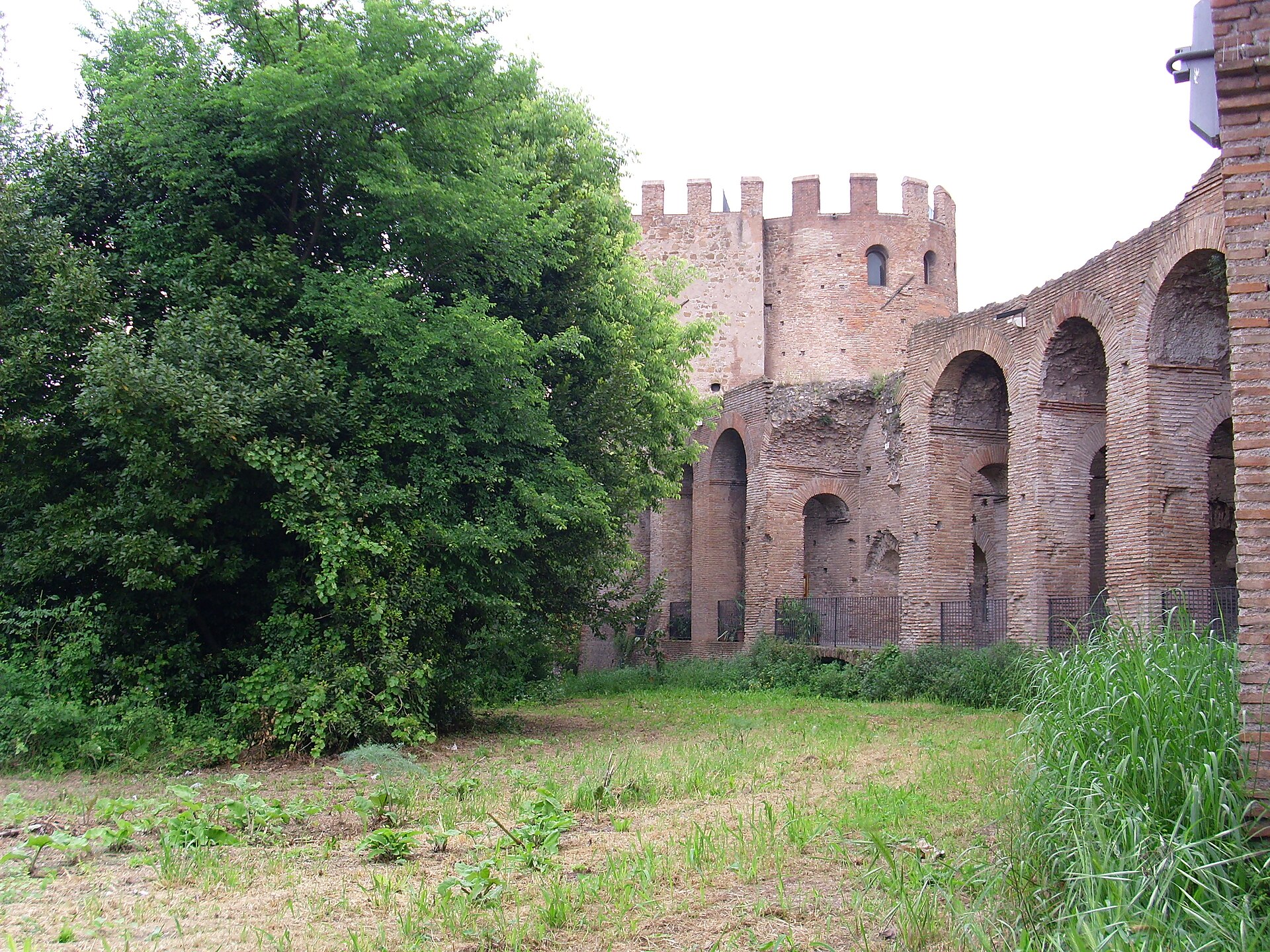
Aurelian Walls (Mura Aureliane)
Всемирное наследие ЮНЕСКОAbout the Object
275
Ancient Roman
Via di Porta San Sebastiano 18, Roma
Architectural Monument
Gallery (1)

The Wall with Which Rome Admitted It Was Afraid
For nearly three centuries, Rome managed without operational fortifications. The old Servian Wall, built back in Republican times, had long since become obsolete and in places built over with houses—it simply ceased to be considered a defense. And not because it was forgotten: they saw no need for it. The borders of the empire lay thousands of kilometers away, and there was no one to defend the capital from. A wall around the city would mean that an enemy could reach it. In 271 AD, the Emperor Aurelian gave the order to build. This is the main thing to understand when standing by this brick behemoth. The Aurelian Wall is not a triumph of imperial might, but its end. Germanic raids began pushing deeper into Italy, and for the first time in centuries, Rome began to fortify itself. Historians rightly place the beginning of the decline right here, in the era of the soldier emperors: the wall is the most honest monument to this time, because it was built out of fear. At the same time, the scale is imperial. About eighteen kilometers in a circle, eighteen gates, three hundred and eighty-one towers. The wall enclosed all seven hills—the entire city as a whole. Aurelian did not live to see its completion; it was finished by his successor Probus. And in the early 4th century, Maxentius raised the wall to almost double its height: the threat was not going away. They built quickly, and this is evident in the technique. Everything already standing along the line of the wall was incorporated into it. A section of the Aqua Claudia aqueduct was simply bricked up between the arches—and the water conduit became part of the fortress. The same was done with tombs, houses, and everything else that came to hand. The wall literally consumed part of the city in order to grow faster. The gates are worth viewing at Porta San Sebastiano—the largest and best-preserved, rebuilt by the Emperor Honorius in the 5th century. Formerly called the Appian Gate because the Appian Way started here, the new name came about because the road led to the basilica and catacombs of Saint Sebastian, where pilgrims went. Through these gates in 1571, the last triumphal procession along the Appian Way entered the city—Marcantonio Colonna after his victory over the Turkish fleet at Lepanto. And the Porta Asinaria, the "Donkey Gate," remembers something else. In 546, barbarian soldiers serving in the Roman army opened it from the inside to the Goths of Totila, and the city was sacked. The wall held out for exactly as long as the men upon it held out. And that is how it all ended. The Aurelian Wall remained Rome's primary defense until 1870—sixteen hundred years of service. In 1870, it was breached by Italian artillery near the Porta Pia, and Rome ceased to be a papal city and became the capital of Italy. Everything you see here from the following century—the Vittoriano, the avenues, Termini Station—began with that breach. The wall, however, still works today, just differently. Many gates are open to traffic, and almost everything people travel to Rome for still lies within it. Aurelian, unwittingly, traced the boundary of the historic center, and it has held for eighteen centuries.
AI translation · 🇬🇧 EN
Rate this review:
Nearby and related
Close by in Rome
About the Object
275
Ancient Roman
Via di Porta San Sebastiano 18, Roma
Architectural Monument
Visitor Information
Free
Morning
В башнях Порта Сан-Себастиано - Музей стены, вход свободный. Оттуда же начинается проход по сохранившемуся участку