
Vasari Corridor (Corridoio Vasariano)
Всемирное наследие ЮНЕСКОAbout the Object
Giorgio Vasari
1565
Renaissance
Ponte Vecchio, Firenze
Architectural Monument
Gallery (2)

Covered river crossing built to avoid meeting townspeople
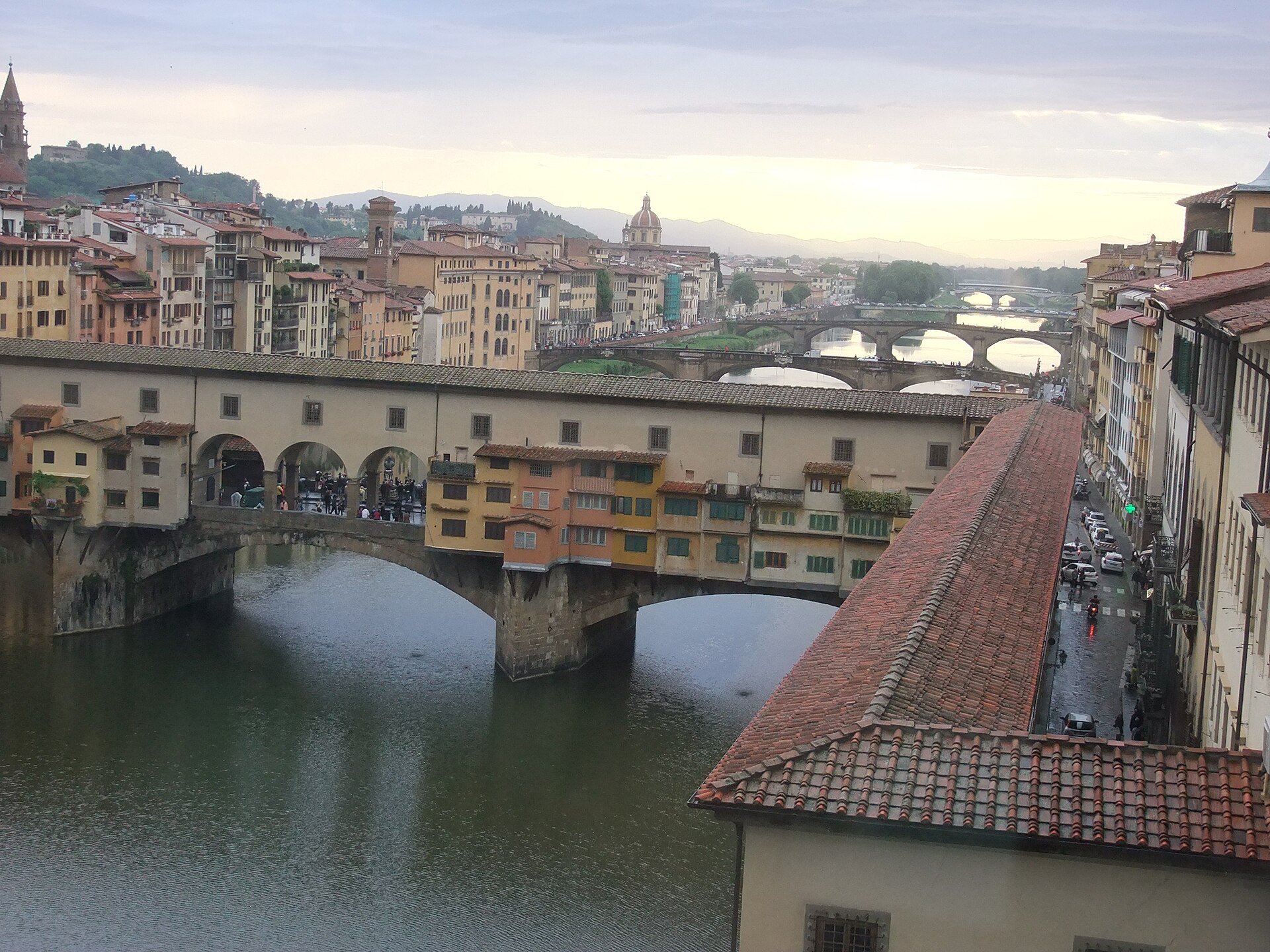
Look at the Ponte Vecchio from the neighboring bridge. Above the jewelers' shops runs a long row of small square windows - a continuous superstructure that goes from one bank to the other and continues further, past the houses. This is the Vasari Corridor. Giorgio Vasari built it in 1565. It connects the Palazzo Vecchio, where the government sat, to the Pitti Palace, where the family moved, and passes on the way through the Uffizi. That means the duke could leave his office and walk home without ever ending up on the street. The corridor's second name speaks directly: Percorso del Principe, the path of the sovereign. The purpose of the structure was for the Medici to move between their buildings without mixing with the crowd below. It is worth stopping here and comparing. A century earlier, Cosimo the Elder built a palazzo on Via Cavour with stone benches in the base where any passerby could sit, and deliberately rejected a more grandiose project so as not to look richer than his fellow citizens. His descendant built a closed passageway across the entire city so as not to see his fellow citizens. Between the two decisions lie one hundred and twenty years and one change in the affairs of state.
AI translation · 🇬🇧 EN
Rate this review:
What This Corridor Did to the Bridge, and How to Walk Through It Today
The corridor has a consequence that is visible right on the bridge itself. The Ponte Vecchio used to be a bridge of butchers, tanners, and blacksmiths: noisy and smelly. In the late sixteenth century, Grand Duke Ferdinando I evicted them all and installed goldsmiths in the vacated spaces. The bridge remains lined with jewelry shops to this day, and tourists photographing the gold displays usually do not realize that they owe this picture to someone else's reluctance to smell meat on their way home. The second thing worth pondering when looking at the route is how it runs. The corridor goes overhead right through the entire center: through the Uffizi, over the bridge, and further to the other bank toward the Pitti. It does not bypass the city, but passes right above it, and this was possible precisely because there was a single patron who could treat the urban fabric as his own. Today, the corridor is open to the public, and it is even accessible for wheelchair users. Inside, it is precisely what it looks like from the outside: a long, low passage with small windows offering views of the city much like it was seen by those who did not want to step outside. That exact sensation is well worth the visit.
AI translation · 🇬🇧 EN
📷 Wikimedia Commons · Sailko · CC BY 3.0 · https://commons.wikimedia.org/wiki/File:Ponte_Vecchio_angolo_piazza_salvatore_e_wanda_ferragamo%2C_torre_dei_mannelli%2C_passaggio_del_corridoio_vasariano.jpg
Rate this review:
Nearby and related
By the same architect
Close by in Florence
About the Object
Giorgio Vasari
1565
Renaissance
Ponte Vecchio, Firenze
Architectural Monument