
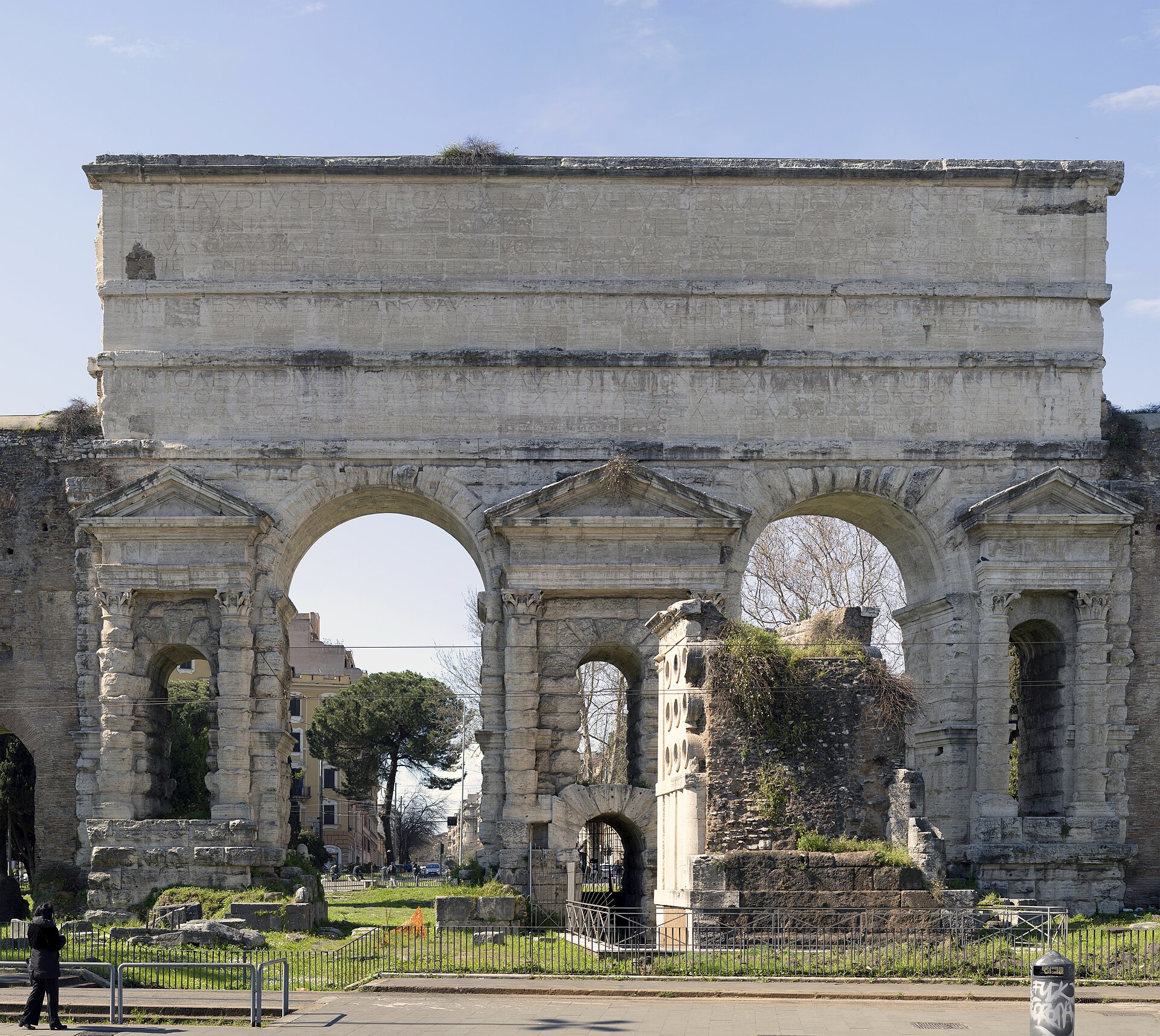
Porta Maggiore
Всемирное наследие ЮНЕСКОAbout the Object
52
Ancient Roman
Piazza di Porta Maggiore, Roma
Architectural Monument
Gallery (1)

Porta Maggiore: The Gate That Is Actually an Aqueduct
Standing in the square, you see what looks like a double city gate made of white travertine. It is a misconception, and a very old one. The arches of Porta Maggiore were not originally part of the city wall. It is an aqueduct built by Emperor Claudius in 52 AD. The arches were needed to carry water over two roads—Via Labicana and Via Prenestina—which led out of Rome to the south. The gate happened by accident: two hundred odd years later, Aurelian extended his wall here and incorporated the ready-made structure into it, much in the same way he walled in the Pyramid of Cestius. Look up at the top of the arches. There, within the masonry, run separate channels—two different conduits in a single structure: the Aqua Claudia and its branch, the Anio Novus (or Nero's aqueduct). Inscriptions from the time of Claudius have survived on the stone, with additions by Vespasian and Titus; subsequent repairs signed themselves, just as they sign today. And now lower your eyes. A piece of ancient pavement has survived beneath the gate: large basalt slabs with deep grooves. These are cart ruts worn down over the centuries. The road and the aqueduct stand side by side here, and both tell the same story: Rome was sustained not by buildings, but by supply lines. The scale is worth mentioning. The Aqua Claudia stretched for sixty-eight kilometers, more than fifteen of them running above ground on arches. These arcades still stride across the Roman Campagna and have become its hallmark; a popular mineral water is named after this water to this day. In total, six aqueducts from different sources entered the city at Porta Maggiore. And this is how it ended—with the most underestimated catastrophe in the city's history. In 537 AD, the Goths cut the Roman aqueducts. They didn't burn temples or destroy the Colosseum—they simply left the city without water. Rome's population plummeted by ninety percent afterward. This is what you should take away when looking at these unassuming arches in the middle of a busy square. The Empire was fed not by marble and vaults, but by water and roads. As long as they worked, everything else worked; when they were cut, a city of a million people turned into a village among ruins within mere decades, and the Baths of Caracalla ground to a halt that very year.
AI translation · 🇬🇧 EN
Rate this review:
Nearby and related
Close by in Rome
About the Object
52
Ancient Roman
Piazza di Porta Maggiore, Roma
Architectural Monument
Visitor Information
Free
Anytime
Стоит посреди оживлённой площади с трамвайным узлом, смотреть можно свободно и в любое время. Под аркой сохранился участок древней мостовой