
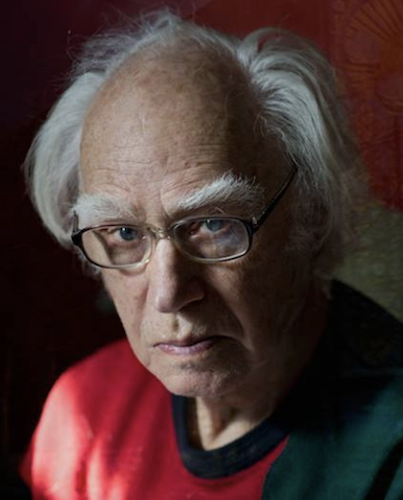
Andrey Stanislavovich Kosinsky
About the Object
Andrey Stanislavovich Kosinsky
1929
Other
Чорсу, Ташкент (у места бани-хаммома)
Historic Personality
Gallery (1)

Andrey Kosinsky: The Architect Who Argued with the Whole City
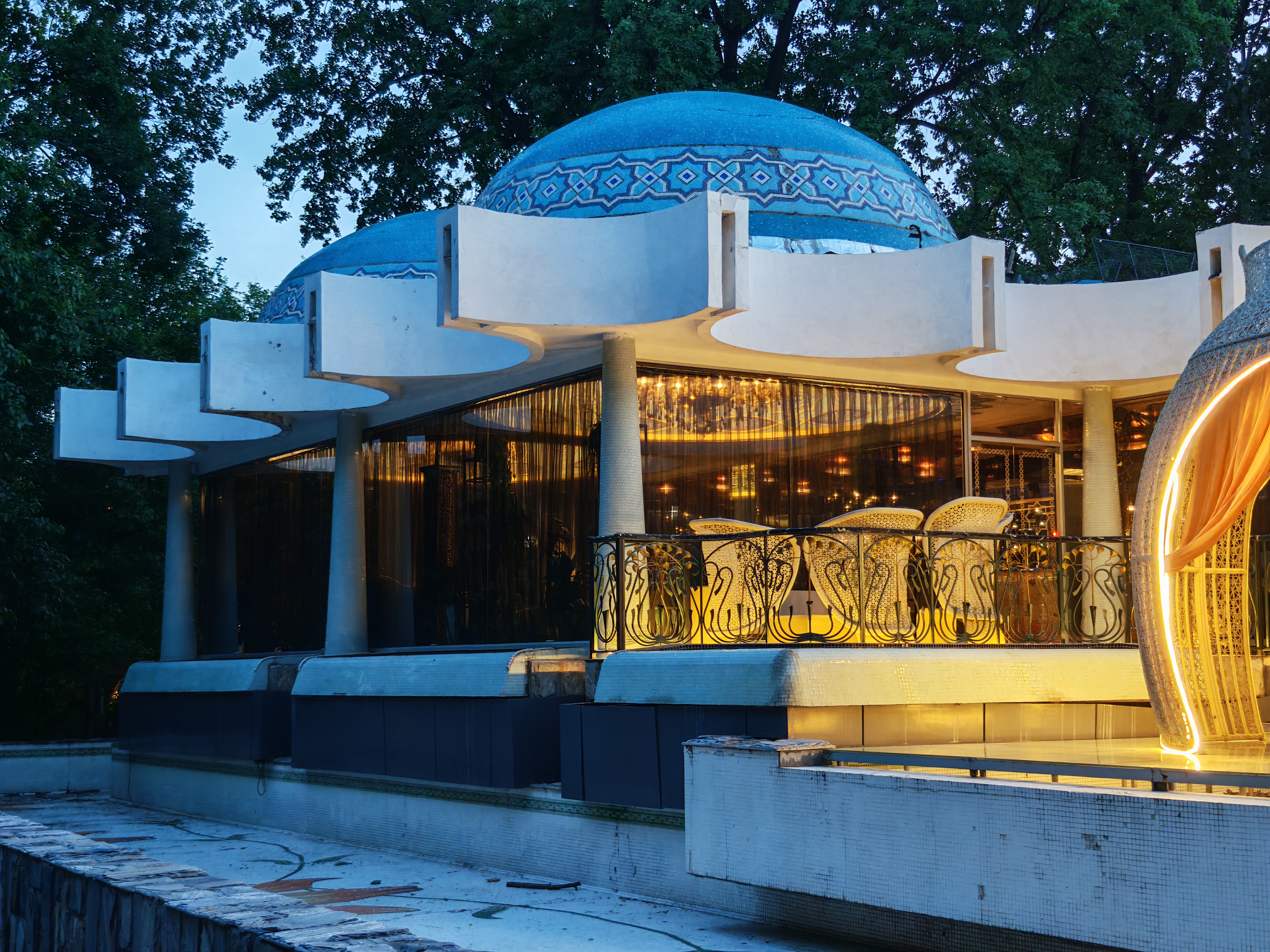
You are standing at Chorsu, and from here everything that Andrey Kosinsky managed to build in Tashkent is within walking distance. A step away stood his hammam bathhouse. Behind your back are the quarters of the old city that he intended to rebuild completely. And the blue domes of the market opposite were designed by his former student Vladimir Asimov. He arrived here from Moscow in 1966, right after the earthquake, assigned for two years, and stayed for fourteen. At Uzgostroyproekt and TashZNIIEP, the Muscovite was met coldly, at Tashgiprogor opinions were divided, and the students of the architecture department welcomed him with enthusiasm. Yuri Miroshnichenko, who shared a studio with him, recalled that Kosinsky's first act was to declare that Le Corbusier was no prophet, and that he himself was much closer to that status. His motto was fitting: let them say whatever they want, as long as they talk, and better yet, write. However, he did not work like a visiting hit-and-run architect. Having received an order for the reconstruction of the Sibzar dacha area, Kosinsky did not go straight to the workshop, but spent a week simply wandering through the old city: dining in small chayxanas, getting acquainted with old-timers, talking with them over chess and tea in the shade of an ayvan. From these walks grew Kalkauz, a project for an entire experimental quarter on the site of mahallas, featuring six-meter-deep sunken highways and trade-and-craft rows instead of the usual microdistrict. Neither Kalkauz, nor the new Chilanzar center, nor the House of Creative Unions was built. Out of his ten Tashkent designs, according to that same Miroshnichenko, only one or two survived. What remains is the bathhouse, which the Tashkent professional community unanimously called the worst building in the city, and the apartment blocks on the former Bohdan Khmelnytsky Street, now Babur Avenue - the very ones with a kaleidoscope of grilles on their summer facades. He was such a storyteller that his tales ought to be heard with a grain of salt regarding the teller himself. Architectural historian Boris Chukhovich, who conversed with him for many years, gives a telling example: Kosinsky explained the failure of the House of Creative Unions by the "seven-day war" in Israel, because of which the money went there. There was no war by that name, and the Six-Day War ended long before the newspapers wrote about the construction. Chukhovich also notes that upon leaving in 1980 not without a sense of grievance, Kosinsky took all the papers he considered valuable with him, and therefore we largely know about his Tashkent projects only from his own words. At the institute, he sang in the satirical ensemble Kohinor, and the Tashgiprogor wall newspaper drew a caricature of him titled "Give us the old city!", depicting Kosinsky on horseback. He lived a long life and died in 2018, continuing to argue with critics until his final years. He explained himself simply: "There is always the earth. And its juices, air, wind - they are what give birth to real art."
AI translation · 🇬🇧 EN
Rate this review:
What They Wrote About Him While He Was Working
On June 22, 1975, Pravda Vostoka published an article about Kosinsky headlined "Mathematics in Defense of Emotions." By this time, his team at Tashgiprogor had spent six years designing the center of Chilanzar, a district the newspaper described as "a massive residential area of Tashkent, with a population nearly equal to a third of the city." The center of this "city within a city" was to be created on thirty-seven hectares. The article is good because it does not resort to mere praise. The initial concept is dissected directly: "At first, the authors came up with the idea of a certain megastructure combining administrative, business, entertainment, and retail functions. Their sketches showed a massive and, frankly, loose array with whimsical building shapes, covered streets, and underground transport routes. This composition, aggressive toward the existing built environment, destroyed the sense of human scale." The authors themselves abandoned this option. What grew in its place was described by the newspaper in detail, and from this description, the center of Chilanzar can be visualized, even though it was never built. On the side of Friendship of Peoples Avenue stood a twenty-story circular hotel "with a peculiar sunshade weaving on it" and three interconnected lower circular industrial and business buildings; together they formed the "entrance square." The ensemble was completed by a covered market, and the description of it is the best part: "The bright mosaic of its domes, highlighting the primary turquoise color and echoing the hue of the eastern sky, acquires a powerful resonance." The article's headline is explained in the middle. Kosinsky defended the circular buildings with calculations: "In defense of circular buildings, Kosinsky brings arguments confirmed by mathematical calculations. Mathematics in defense of emotions?! Well, when you take a step of this kind, you need to be armed, ready for 'circular defense.'" The irony is friendly but precise: a man arguing with the entire profession came to the dispute armed with figures. The same article also mentions the residential buildings that ultimately remained, located on the former Bogdan Khmelnitsky Street, now Babur Avenue. They are mentioned with approval: "here the architect truly made friends with industry, and this friendship yielded interesting results... not only vibrant polychromy in the facade finishes, which directly connects to the traditions of ancient Uzbek architecture, but a bold, large-scale, and unusual solution to the plastic task." This street was also noticed in Moscow. Architecture of the USSR wrote in November 1975 that the development along Khmelnitsky Street "already now, in the process of construction, has received a major press because this street is being built by a capable team led by a searching, talented architect Andrey Kosinsky." Yet in November 1978, the same magazine expressed doubt. In a review of the national in Soviet architecture, among examples of overzealousness was the line: "doubt is raised by the architectural treatment in Tashkent by architect A. Kosinsky of the residential buildings on B. Khmelnitsky St., essentially sheltered by 'sunshade' walls." Three years between praise and doubt, and the magazine is the exact same one. Curiously, in that same issue, the magazine reviewed his own article, "Development of B. Khmelnitsky Street in Tashkent. Project Justification," where Kosinsky "sets out his positions on a number of problems in Soviet architecture in a figurative and emotional form." The reviewer noted its publication "as a very positive phenomenon" and called the article "authorially idiosyncratic and debatable." In other words, he was allowed to argue in print, and this was considered useful. The press preserved what memory did not: names. The authors of the Khmelnitsky Street project were Kosinsky, Miroshnichenko, Demchinskaya, Mamaeva, Narubanskaya, while students from the Tashkent Polytechnic Galustyan, Zinatulin, Kitanov, Memetova, and Petrova participated in the sketches. The residential buildings were signed by Kosinsky and Azimov with engineers Pergamsky and Madgazina. In 1970, under the guidance of Babiysky, Anufriev, and Kosinsky, students successfully defended their diploma projects with honors regarding the center of the Chilanzar district and its central market. The collaboration with students, usually spoken of in general terms, is clearly visible here in the signatures on the drawings. The rest from that same press forms a standard working biography: the Navoi Garden project, approved by the Council of Ministers in 1968, where he worked alongside Mosproekt-1 and Tashkent architect Shuvayeva; with her as well, the House of Folk Arts and Crafts in Bukhara, noted by the magazine in 1970 among works where the monument becomes part of a new composition; chief architect of the fourth workshop of Tashgiprogor by 1974; the board of the Tashkent branch of the Union of Architects in 1975; an ethnographic zone in the old city and a neighborhood for one hundred thousand residents in 1976; and the Kohinur ensemble, where he was listed among the veterans of the first intake. A man more often remembered as a debater looks simply very busy in the newspapers of his time.
AI translation · 🇬🇧 EN
Rate this review:
Nearby and related
By the same architect
Close by in Tashkent
About the Object
Andrey Stanislavovich Kosinsky
1929
Other
Чорсу, Ташкент (у места бани-хаммома)
Historic Personality