
Centrale Montemartini
About the Object
eng. Corrado Puccioni
1912
Industrial
Via Ostiense 106, Roma
Museum
Gallery (1)

Gods in the machine hall: what antique sculpture is doing in a decommissioned power plant
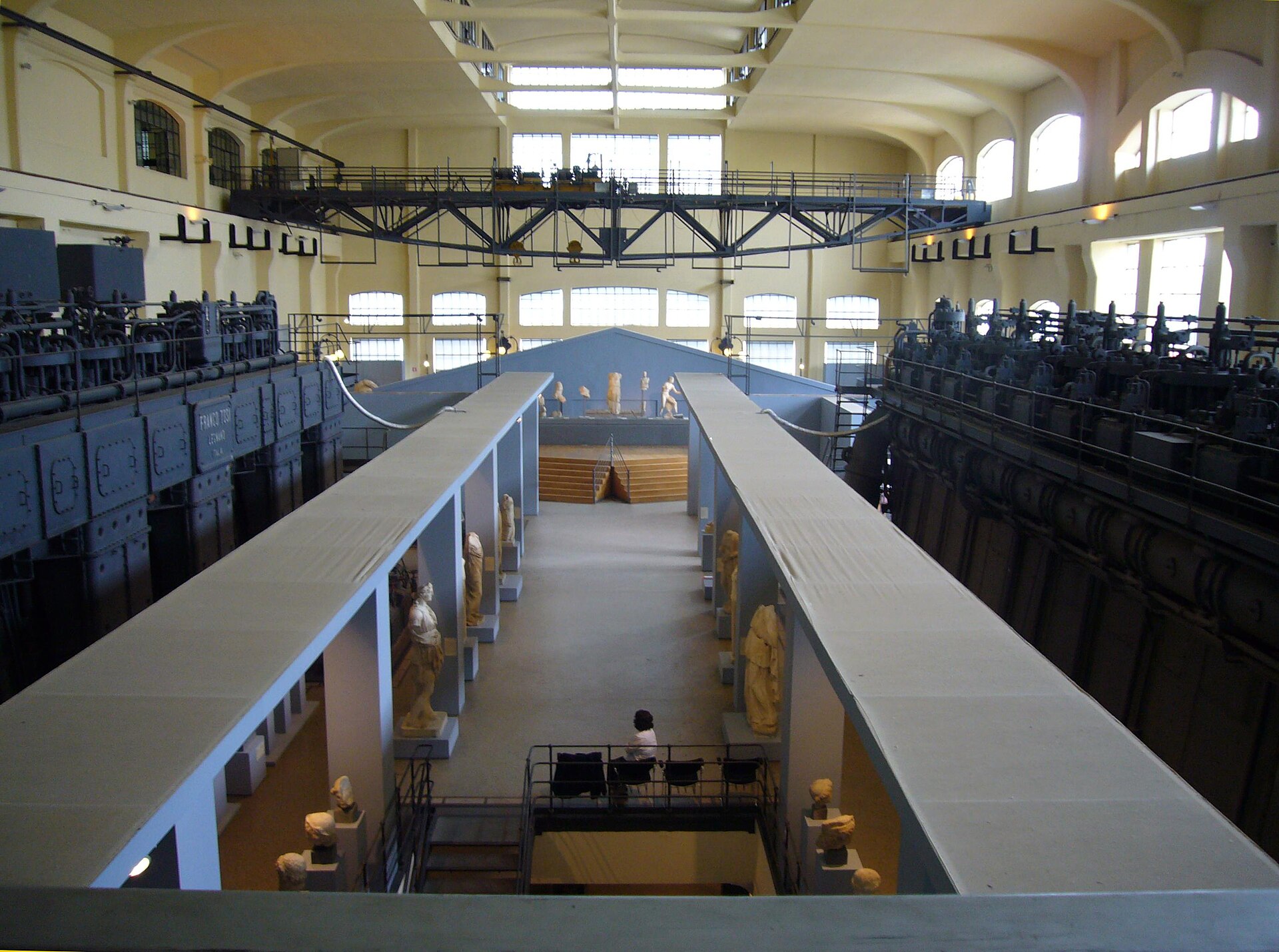
There is a museum in Rome that is worth traveling four metro stops away from the center for. It stands on Via Ostiense, in the industrial belt where at the beginning of the 20th century the city banished everything that did not fit into ceremonial Rome: the slaughterhouse, the gasometers, warehouses, and this very power plant. The station opened on June 30, 1912, under Mayor Ernesto Nathan, designed by engineer Corrado Puccioni. It was the first municipal power plant: Rome decided that the city's electricity should be provided by the municipality, not a private company. A year later, the station was named after Giovanni Montemartini, the technical advisor in Nathan's administration who died right during a city council meeting. It operated for just over half a century and shut down in the sixties. Next came the usual fate of an industrial building: standing and falling into disrepair. In the late 1980s, the Acea company undertook its reconstruction, and in 1997 what people now come here for happened. The Capitoline Museums closed for restoration, and hundreds of sculptures needed temporary housing. They were brought to the decommissioned plant and arranged right in the machine hall, between the turbines. The exhibition was called "Machines and Gods" and was considered temporary. The public liked it so much that in 2005, when the restoration on the Capitoline Hill ended, they decided not to take the sculptures away. The station became the second home of the Capitoline Museums. You have to look at two things at once here, and that is the whole trick. The machines stayed in their places: two three-thousand-horsepower Franco Tosi steam turbines, two seven-and-a-half-thousand-horsepower Tosi diesels, a boiler for forty-five atmospheres. They were not pushed into a corner or turned into pedestals. A marble god stands in front of a black steel behemoth, and both things are illuminated equally well. This works better than any museum hall, and here is why. In a usual museum, an ancient statue stands among other ancient statues, and the eye stops noticing it after twenty minutes. Here, next to it is a machine that is two millennia younger and made with the same obsession for precision. Marble ceases to be "antiquity in general" and once again becomes what it was: a very well-made thing. What exactly is here: much of what was found during the excavations of the late 19th and early 20th centuries, when Rome was hastily being built as a new capital and every foundation pit yielded antiquity. Some of the finds are from Largo Argentina. There are remnants of the Temple of Jupiter Optimus Maximus and fragments of the Temple of Apollo Sosianus. And finally, a purely practical point. It is convenient to drop by here on the way from the south: the Garbatella metro station is a couple of minutes away, and the Garbatella neighborhood itself, which we have a separate card about, begins on the other side of the street. One metro exit, two completely different stories about what Rome wanted to be at the beginning of the 20th century: a city of workers' housing and a city of electricity.
AI translation · 🇬🇧 EN
Rate this review:
Nearby and related
Close by in Rome
About the Object
eng. Corrado Puccioni
1912
Industrial
Via Ostiense 106, Roma
Museum