
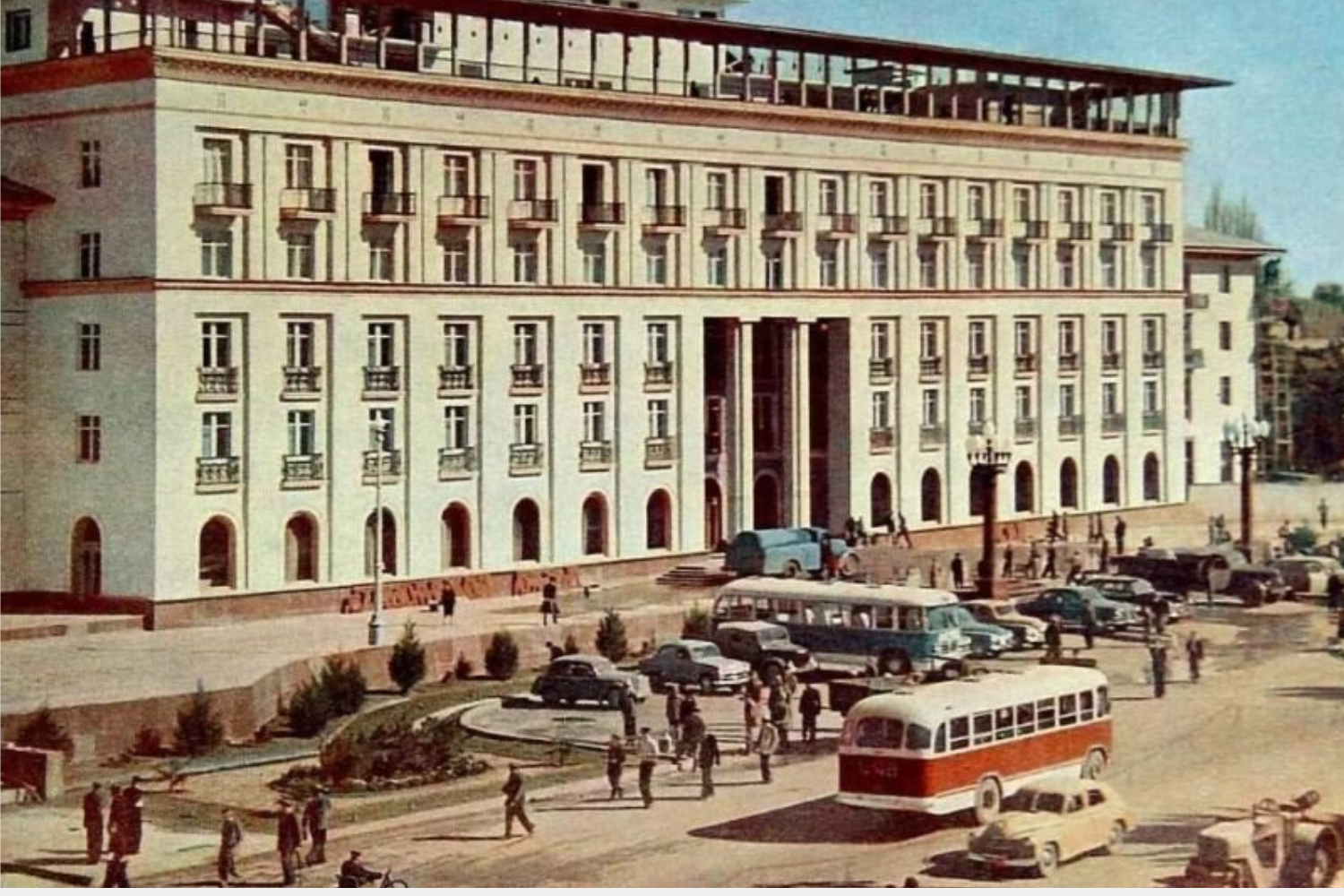
Lotte City Hotel Tashkent Palace (früher Hotel „Taschkent“)
About the Object
M. Bulatov, L. Karash, N. Rybnikov, V. Shevchenko
1959
National Style
Lotte City Hotel Tashkent Palace, 56, Sharof Rashidov Street, Mirabad District, Tashkent, 100029, Uzbekistan
Architectural Monument
Gallery (1)

Das Tashkent Hotel
Wir stehen im Herzen des Theaterplatzes, und vor uns erhebt sich das Gebäude, das sein architektonisches Ensemble vollendete. Das in den späten 1950er Jahren erbaute Tashkent Hotel erhob sich an der Stelle des geschäftigen Woskresenski-Basars und der alten Einkaufsarkaden des Kaufmanns Tesikow. Beachten Sie, wie das Hotel zum Nawoi-Theater positioniert ist. Sie stehen sich direkt gegenüber und bilden ein klassisches Paarensemble, das in der orientalischen Architektur als "Kosh" bekannt ist. Dies war ein bewusst geführter Dialog zweier Meister: Architekt Mithat Bulatov versuchte nicht, Alexei Schtschusews grandiose Schöpfung zu über Schatten, sondern sie taktvoll hervorzuheben. Genau deshalb weist das Hotel schlanke Proportionen und eine monumentale, aber zurückhaltende vertikale Komposition im Art-déco-Stil auf. Das Gebäude hat eine komplexe Form, wobei der zentrale fünfstöckige Hauptbau fließend in vierstöckige Seitenflügel übergeht. Wenn Sie hineinblicken, entdecken Sie einen geräumigen Innenhof. Zur Sowjetzeit diente er als gemütlicher Rückzugsort, versteckt vor dem Lärm der Stadt, während alle Versorgungsdienste - Restaurantküchen und Lagerbereiche - über einen speziellen unterirdischen Gang im Keller verborgen wurden, um die Ästhetik des Platzes zu wahren. Aus technischer Sicht war das "Tashkent" ein echter Durchbruch. Erstmals in der Geschichte Usbekistans wurde hier eine automatische Klimaanlage installiert - ein unglaublicher Luxus für jene Zeit. Um die Sicherheit des Gebäudes in einer seismischen Zone zu gewährleisten, setzten Ingenieure innovative dünnwandige Stahlbetonstrukturen ein. Dies ermöglichte es ihnen, schwere Ziegelwände im Inneren zu eliminieren und einen leichteren Grundriss zu schaffen. Die Architektur des Hotels ist von einem "südländischen Flair" durchdrungen. Anstelle von verschnörkelter Dekoration wirken die Formen selbst: Tiefe Aiwane im Loggia-Stil am Eingang spenden natürlichen Schatten, und auf dem Flachdach des Mittelteils betrieb man einst unter einer leichten Galerie ein Sommercafé. Ein aufmerksamer Betrachter wird auch die hellen Akzente bemerken: Die Eingänge zum Gebäude und zum Restaurant sind durch lebhafte Majolikakfliesen in Türkis, Blau und Weiß hervorgehoben. Sogar das Schattenvordach auf dem Dach war mit dekorativen Wandgemälden geschmückt. Das Tashkent Hotel (heute das Lotte City Hotel) ist ein seltenes Beispiel dafür, wie Architektur auf ihre Nachbarn "hören" kann. Es hat die Zeit mit Bravour überstanden und bleibt ein Vorbild städtebaulicher Sensibilität und des Respekts vor der Tradition.
AI translation · 🇩🇪 DE
Rate this review:
Unvollendete Etagen
Im Dezember 1953 veröffentlichte die „Prawda Wostoka“ ein Feuilleton, das am Bahnhof beginnt. Ein Ankömmling steigt in ein Taxi und bittet, ihn ins Hotel zu bringen. Er wird beim besten der Stadt abgesetzt, und dort sagt man ihm: „Keine freien Zimmer.“ Im zweiten ist es dasselbe, im dritten auch. Und dann bietet der Fahrer seinen eigenen Ausweg an: „Ich kenne da jemanden... Sie besorgt Ihnen für einen Zehner eine Ecke mit Bett.“ Das Feuilleton hieß auch so: „Keine freien Zimmer“. Die Zahlen darin sind einfach: für ganz Taschkent gibt es vier Hotels mit insgesamt 434 Betten. Das beste von ihnen hieß damals schon „Taschkent“, aber das war ein anderes, früheres Hotel. Das neue am Theaterplatz wurde an jenem Tag beiläufig als „geplanter Bau“ erwähnt, mit dem Vorbehalt, dass selbst dieses die „Krise“ nicht lösen werde. Im Juni 1956 war auf dem Platz gegenüber dem Nawoi-Theater bereits das Fundament eines „fünfstöckigen Gebäudes“ gelegt worden. Das Projekt stammte von Taschgiproproekt, den Architekten Mithat Bulatow und L. Karasch sowie dem Ingenieur W. N. Lewtschenko. Das Erdgeschoss wurde für ein „Gastronom“-Geschäft, ein Restaurant, ein Postamt, einen Telegrafen und eine Sparkasse vorgesehen. Für die Verkleidung wurden Marmor, Granit, Keramik und farbiger Putz versprochen. Die farbige Keramik an der Fassade hat ihre eigene Geschichte. Sie wurde von einem Versuchswerk hergestellt, „das sich am Stadtrand von Taschkent hinter dem Textilkombinat eingenistet hatte“. Dort wurden spezielle Öfen für Keramik und farbige Majolika aufgestellt, und 1958 schmückten die Produkte dieser Öfen bereits „das neue Hotel „Taschkent““. Ein Jahr später erzählte der Chefingenieur des Werks, Rahmatulla Dschabbarow, ein Absolvent der Polytechnischen Hochschule vor gerade einmal einem Jahr, über seine Fliesen: „Man sieht sie in der Fassadenverkleidung des Hotels „Taschkent“.“ Der Ton dafür wurde aus Steinbrüchen bei Darbasa herbeigeschafft. Im September 1958 nannte der Fotokorrespondent A. Palechow das Hotel „das größte Gebäude in Taschkent“. Es hatte 273 Zimmer, ein Restaurant, drei Cafés und einen unterirdischen Wirtschaftshof. „Zum ersten Mal in Taschkent wird eine Klimaanlage installiert, die die Temperatur in den Zimmern regelt.“ Die Gesimse sind „mit Ölfarben bemalt“. Man beeilte sich für ein bestimmtes Datum. Im Oktober 1958 wurde in Taschkent die Konferenz der Schriftsteller der Länder Asiens und Afrikas eröffnet, und dafür wurde der erste Bauabschnitt des Hotels übergeben. Konferenzteilnehmer wurden „in der hellen Lobby des Hotels „Taschkent““ fotografiert. Drei Jahre später erinnerte man sich in der Beschreibung eines Sommerabends auf dem Platz daran, dass „im Herbst 1958 genau in unserer Stadt der ‚Geist von Taschkent‘ geboren wurde“. Und an jenem Abend traten die Leute am Hotel „auf die durchbrochenen Hängealkone“ hinaus. Im November 1959 öffnete im Erdgeschoss der „Gastronom“, „der größte der Republik“. Dort arbeiteten 120 Verkäufer, und Lebensmittelbestellungen wurden telefonisch entgegengenommen. Und das Hotel war immer noch nicht fertiggestellt. Der Bau hatte 1956 begonnen und war auf zwei Jahre ausgelegt. Bis September 1960 waren vier Jahre vergangen, und der linke Flügel, 87 Zimmer von 273, stand immer noch unfertig da. Die Möbel waren bereits angeliefert worden. Der Auftragnehmer hatte die Ausbauarbeiter zu einem anderen Objekt abgezogen. Der Artikel darüber hieß treffend: „Unvollendete Etagen“. Die Rechnung war dieselbe wie im Feuilleton vor sieben Jahren. Es gab nun sechs Hotels in der Stadt, 1100 Betten. Aber mehr als sechzig Prozent davon wurden für Delegationen und Kongresse reserviertgehalten. Den einfachen Ankömmlingen blieben nicht mehr als vierhundert Betten. Etwa zweihundert wurden täglich abgewiesen, und das Bautempo wurde als „schildkrötenhaft“ bezeichnet. Im Januar 1962 zeigte man, was als Nächstes auf dem Platz passieren würde. Nebenan sollte ein neues Hotel gebaut werden, und die Autoren waren wieder Bulatow und Karasch. „Zwei gläserne Wohnkomplexe des Hotelkomplexes werden sich wie zwei 13-stockige Eisberge über dem Platz erheben.“ Ab dem zwölften Stock wurde den Taschkentern versprochen, ihnen im August 1965 die Stadt zu zeigen. Auf dem Plan des Platzes, den die Zeitschrift „Architektur und Bauwesen Usbekistans“ 1977 druckte, sind die gläsernen Türme verschwunden. In demselben Artikel änderte sich auch die Einschätzung des Theaters. Der Autor, S. Blagow, schreibt: „Im Zentrum steht das nach heutigen ästhetischen Maßstäben schwere Theater. Eine solche eindrucksvolle Insel.“ Den Kontrast dazu bilden nun die „leichten Konstruktionen“ der neuen Gebäude, und das Hotel „Taschkent“ wird unter ihnen genannt. Das Haus, das als bescheidener Nachbar des Schtschussew-Theaters gedacht war, wurde drei Jahre nach seiner Fertigstellung bereits zu den modernen gezählt.
AI translation · 🇩🇪 DE
Rate this review:
Nearby and related
By the same architect
Close by in Tashkent
About the Object
M. Bulatov, L. Karash, N. Rybnikov, V. Shevchenko
1959
National Style
Lotte City Hotel Tashkent Palace, 56, Sharof Rashidov Street, Mirabad District, Tashkent, 100029, Uzbekistan
Architectural Monument
Visitor Information
Metro "Mustaqillik maydoni"