
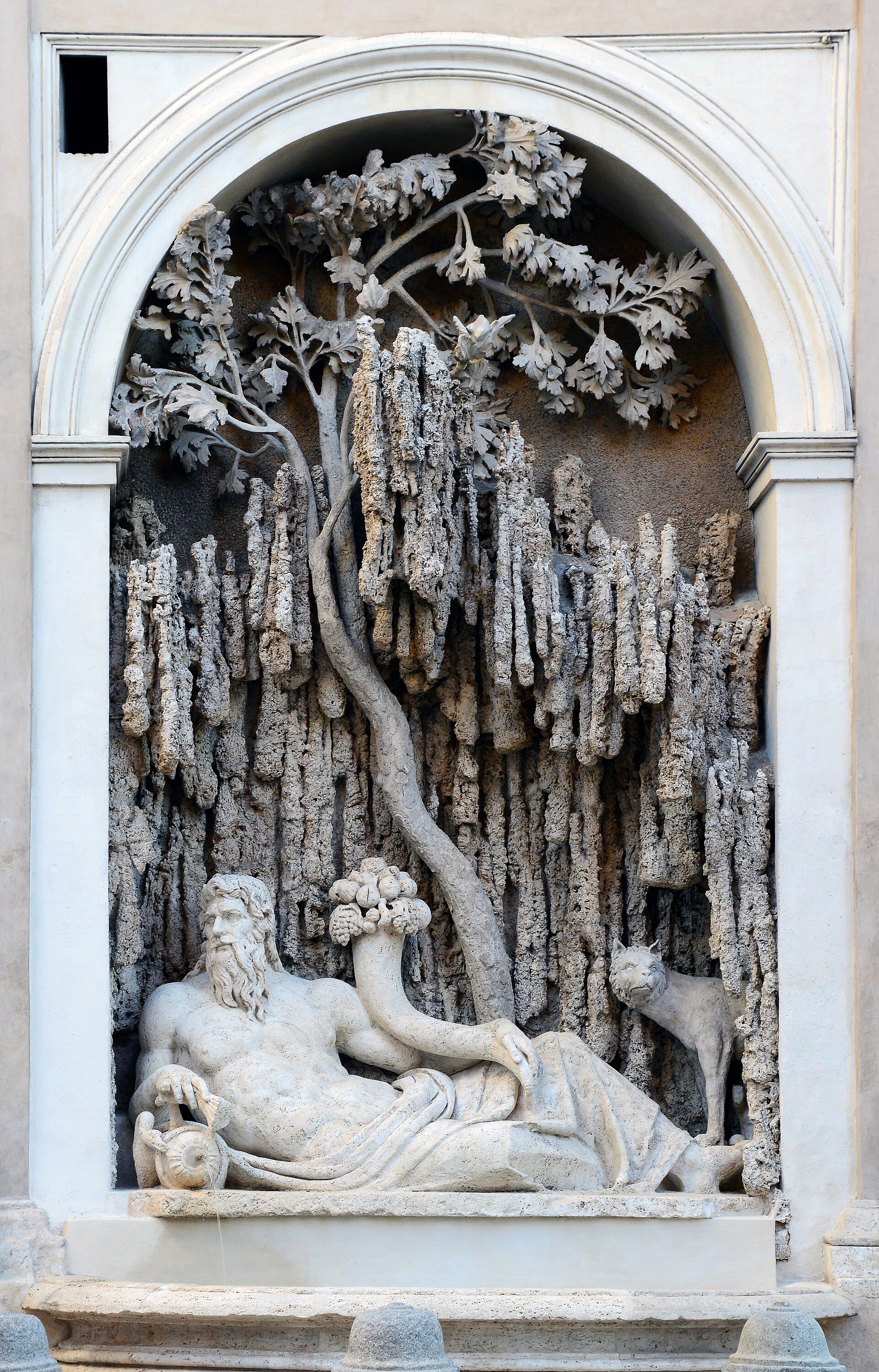
Le Quattro Fontane (The Four Fountains)
Всемирное наследие ЮНЕСКОAbout the Object
Domenico Fontana (three figures), Pietro da Cortona (Diana)
1593
Baroque
Incrocio Via delle Quattro Fontane / Via del Quirinale, Roma
Sculpture / Monument
Gallery (1)

Four figures on four corners and three obelisks visible from here
The intersection where you are standing looks ordinary: two narrow streets, cars, no square at all. But look closely at the corners of the houses. In every corner, in all four, a fountain is built: a reclining figure, water, a basin. They were installed between 1588 and 1593 under Pope Sixtus V. The two men are rivers: the Tiber, recognizable by the she-wolf beside it - that is Rome; and the Arno - that is Florence. The two women are goddesses: Juno, representing strength, and Diana, representing chastity. Three of the figures were made in the workshop of Domenico Fontana, while Diana is attributed to Pietro da Cortona. Now for the main reason to come up here. From the middle of the intersection, the streets afford views in turn. From here you can see three obelisks at once: at Santa Maria Maggiore, at Trinità dei Monti above the Spanish Steps, and in the Piazza del Quirinale. All three were erected by the same Pope Sixtus V. This is neither coincidence nor luck. The intersection lies at the highest point of the Quirinal, and both streets are new ones, cut through under the same pope: one led from Trinità dei Monti to Santa Maria Maggiore, the other from Porta Pia to the Quirinal Palace. Sixtus V ruled for only five years and in those five years reshaped the city: he cut straight streets through wasteland and vineyards, and placed obelisks at the ends and intersections - like milestones visible from afar. A pilgrim walking from one great church to another always saw where to go. In other words, these four modest figures on the corners are not decoration, but the marker of a node: the place where two axes converge and from which the entire design is visible. Urban planning before the word even existed. And one last thing. Around the corner, twenty steps from here, is the tiny church of San Carlo, which is why this place is called San Carlino alle Quattro Fontane. Borromini built it right here, on the loudest and tightest corner one could possibly choose.
AI translation · 🇬🇧 EN
Rate this review:
Nearby and related
By the same architect
Close by in Rome
About the Object
Domenico Fontana (three figures), Pietro da Cortona (Diana)
1593
Baroque
Incrocio Via delle Quattro Fontane / Via del Quirinale, Roma
Sculpture / Monument