
Portici di Bologna
Всемирное наследие ЮНЕСКОAbout the Object
1041
Other
Strada Maggiore 19 (Каза Изолани), Bologna
District
Gallery (1)

Forty kilometers of someone else's property given to you underfoot
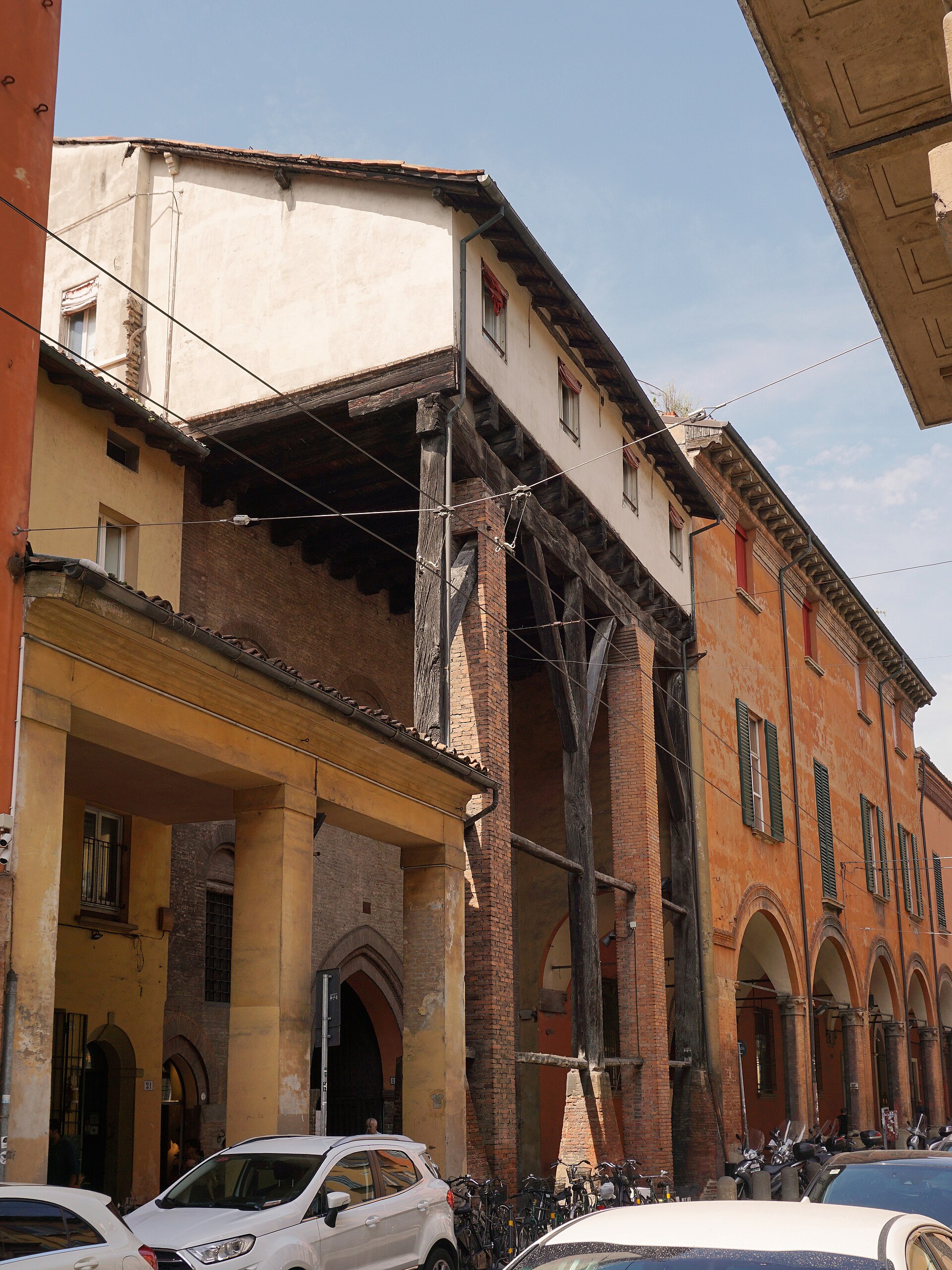
In Bologna, you can walk through half the city and never get wet. Covered galleries stretch along the streets almost continuously, and in the rain locals walk without umbrellas, while in the July heat they choose routes through the shade. A visitor usually thinks this is a municipal initiative, like station canopies. It is not, and that is where the whole story lies. The portico in Bologna started as an encroachment. In the eleventh century, the city was growing fast, space inside the walls was lacking, and townspeople began expanding their upper floors outward, projecting them over the street. Such a projection needs something to rest on, so wooden pillars were placed underneath it. The pillars stood on common land, meaning a person annexed a room upstairs at the expense of the street below. The first mention of such a structure dates back to 1041. Then happened what makes this story ours. The city did not demolish the unauthorized structures. It legalized them and turned them inside out. According to the statute of 1288, every new house had to be built with a portico, and a house lacking a portico was obliged to add one. The owner built it, with their own money, on their own land, and maintained it as well. Anyone had the right to walk under it. The rules were meticulous. The portico had to be no lower and no narrower than seven Bolognese feet, which is about two meters sixty-six, so that a person on horseback could ride under it. The statutes of 1352 raised the bar to ten feet, about three meters sixty. In 1568, a decree was issued to rebuild the wooden porticos in brick or stone, and the city changed its texture, but not its layout. The result was something a modern urban planner dreams of getting and almost never does: a continuous pedestrian network paid for by private owners and open to all. No architect ever designed it. It was assembled over seven centuries of identical requirements for everyone who builds. In 2021, the porticoes were inscribed on the UNESCO list in twelve separate sections, from Piazza Santo Stefano and Strada Maggiore to the gallery in the working-class district of Barca, built already in the 1960s. This is an important detail of the list: what was placed under protection was not antiquity, but a living tradition that was never interrupted.
AI translation · 🇬🇧 EN
Rate this review:
Nine-meter oak pillars and the dispute over how many kilometers there are
It all started on Strada Maggiore, at number 19. There stands Casa Isolani, a residential building from the mid-thirteenth century with a wooden portico. The oak pillars are nine meters high, and they support the projection of the third floor. Brick and stone came later, but here what was there at the very beginning survived: a house that stepped out onto the street and was propped up by logs. Standing under these pillars is useful because it immediately becomes clear where the whole system came from. No urban planning idea. A person just needed an extra room. Now about the numbers, because you will be given different ones. The DK guidebook writes about 38 kilometers of covered galleries and adds that this is more than in any other city in the world. Bologna's application materials for UNESCO speak of 62 kilometers. The English reference tradition names 53. There is no contradiction here, they count different things: only the historic center, the entire city within its current boundaries, or the sum of sections included in the protected site. The honest formulation sounds like this: about forty kilometers in the center and over sixty across the entire city. The practical side of why it is worth knowing. With a stroller, with a child, with bad knees, in the rain and in the heat, Bologna is designed more comfortably than any Italian cities you have been to before it. After the Roman cobblestones and the Florentine crush, the difference is felt in the very first half hour. It makes sense to build a route around Bologna not from sight to sight, but from portico to portico, and then the day turns out twice as easy.
AI translation · 🇬🇧 EN
Rate this review:
Nearby and related
Close by in Bologna
About the Object
1041
Other
Strada Maggiore 19 (Каза Изолани), Bologna
District