
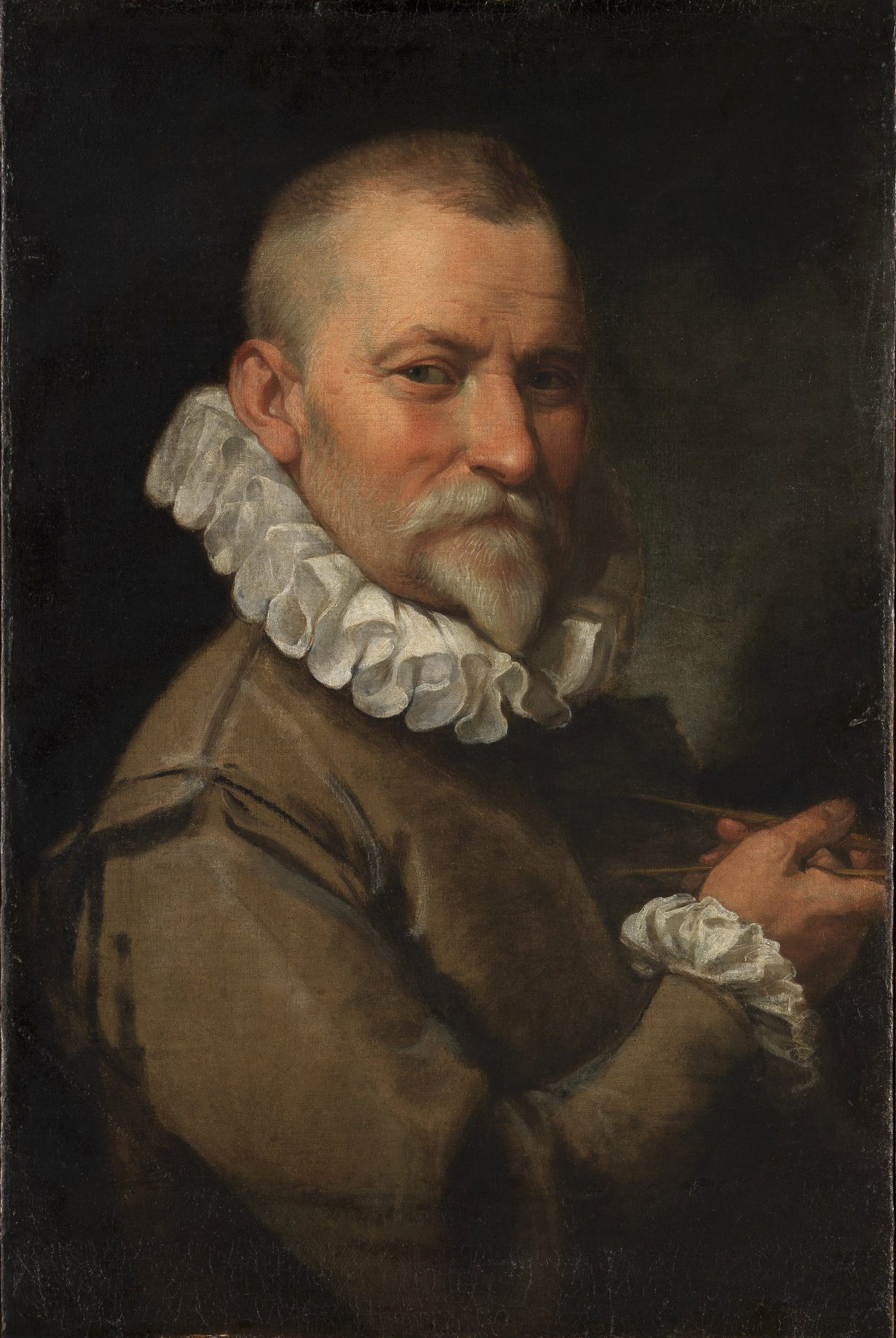
Domenico Fontana
About the Object
Domenico Fontana
1543
Other
Piazza San Pietro, Roma
Historic Personality
Gallery (1)

The Man Who Moved the Obelisk and Redrew the City
If you have been walking around Rome for a few days, you have already seen his work five or six times without knowing his name. He was born in 1543 in Melide - the Swiss shore of Lake Lugano, an Italian-speaking area. He came to Rome at the age of twenty to join his older brother, starting out not as an architect, but as a plasterer. Then as a stonemason, then a contractor. He received his first commission in 1577 - a villa for Cardinal Montalto. Eight years later, Cardinal Montalto became Pope Sixtus V, and Fontana's life changed in a single day. Sixtus V ruled for just five years, from 1585 to 1590, and in those five years accomplished more than others in twenty. His plan was simple and immense: to make Rome navigable. The city back then was a dense core near the Tiber and wasteland with vineyards around the great basilicas, between which pilgrims walked at random. The pope ordered straight streets to be cut from church to church, and signs visible from afar placed at the ends and intersections. Fontana became the executor of all this. The main affair was the obelisk. An Egyptian obelisk weighing over three hundred tons had stood apart from St. Peter's Basilica since the time of Nero. The pope wanted it to stand in the center of the square. No one had moved such things for over a thousand years, and the undertaking was considered madness. Fontana took it on. The obelisk was bound, lifted by a system of pulleys and windlasses, lowered onto rollers, transported, and raised again in the new location. Hundreds of people, a hundred and fifty horses, and dozens of windlasses took part in the work - exact figures in sources vary, with some citing eight hundred workers and others nine hundred. They began on April 30, 1586, and set the obelisk in its new place on September 10 of the same year. A story is told about this day that everyone in Rome knows. Supposedly, the lifting had to be done in complete silence, and the pope threatened death to anyone who cried out; the ropes began to stretch, and a sailor from Bordighera named Benedetto Bresca could not hold back and shouted: "Water on the ropes!" The ropes were watered, they tightened, the obelisk stood up, and the sailor was not executed, but rewarded. The sources themselves call this story a legend, and I pass it on as a legend - but it is good because it accurately describes the physics: wet hemp really does tighten. He later published a book with drawings about this - "The Transportation of the Vatican Obelisk". This is one of the first works in history where an engineer details exactly how he did a complex job: not boasting, but a manual. Next on the list - and you have seen almost all of this already. Three other obelisks placed by him: at Santa Maria Maggiore, at San Giovanni in Laterano, in Piazza del Popolo. The Sistine Chapel in Santa Maria Maggiore. The Lateran Palace. The lantern on the dome of St. Peter's Basilica, which he finished building together with Giacomo della Porta after Michelangelo's death. The aqueduct that brought water back to the hills. And the Four Fountains at the Quirinal intersection - from their angle you can see three of his obelisks at once, and this is not a coincidence, but his own calculation. Now for what is usually not told about this man. In 1590, Sixtus V died, and it all ended. The new pope, Clement VIII, liked neither Fontana's style nor his influence; there were plenty of envious people; an accusation of embezzling state funds was brought forward. He left Rome. He left for Naples - and started over there. He became the viceroy's architect, built canals and the Royal Palace, died in 1607 and is buried there. And quite on the margins of history: his people, digging a canal under Naples, stumbled upon a buried city. It was Pompeii. At the time, this was not understood and they did not start digging - another century and a half. That is the whole life. A plasterer from near Lugano, five years of absolute power, an obelisk no one could lift, exile on charges of theft, and a second career in a foreign city. Rome is rarely grateful, but it holds onto traces for a long time: you have already walked past five of his points, even if you did not notice.
AI translation · 🇬🇧 EN
Rate this review:
Nearby and related
Close by in Rome
About the Object
Domenico Fontana
1543
Other
Piazza San Pietro, Roma
Historic Personality