
Photo unavailable
Vilen Lazarevich Spivak
About the Object
Vilen Lazarevich Spivak
Other
Ресторанный комплекс «Зарафшан», Ташкент
Historic Personality
Vilen Spivak: Four Buildings and Four Eras
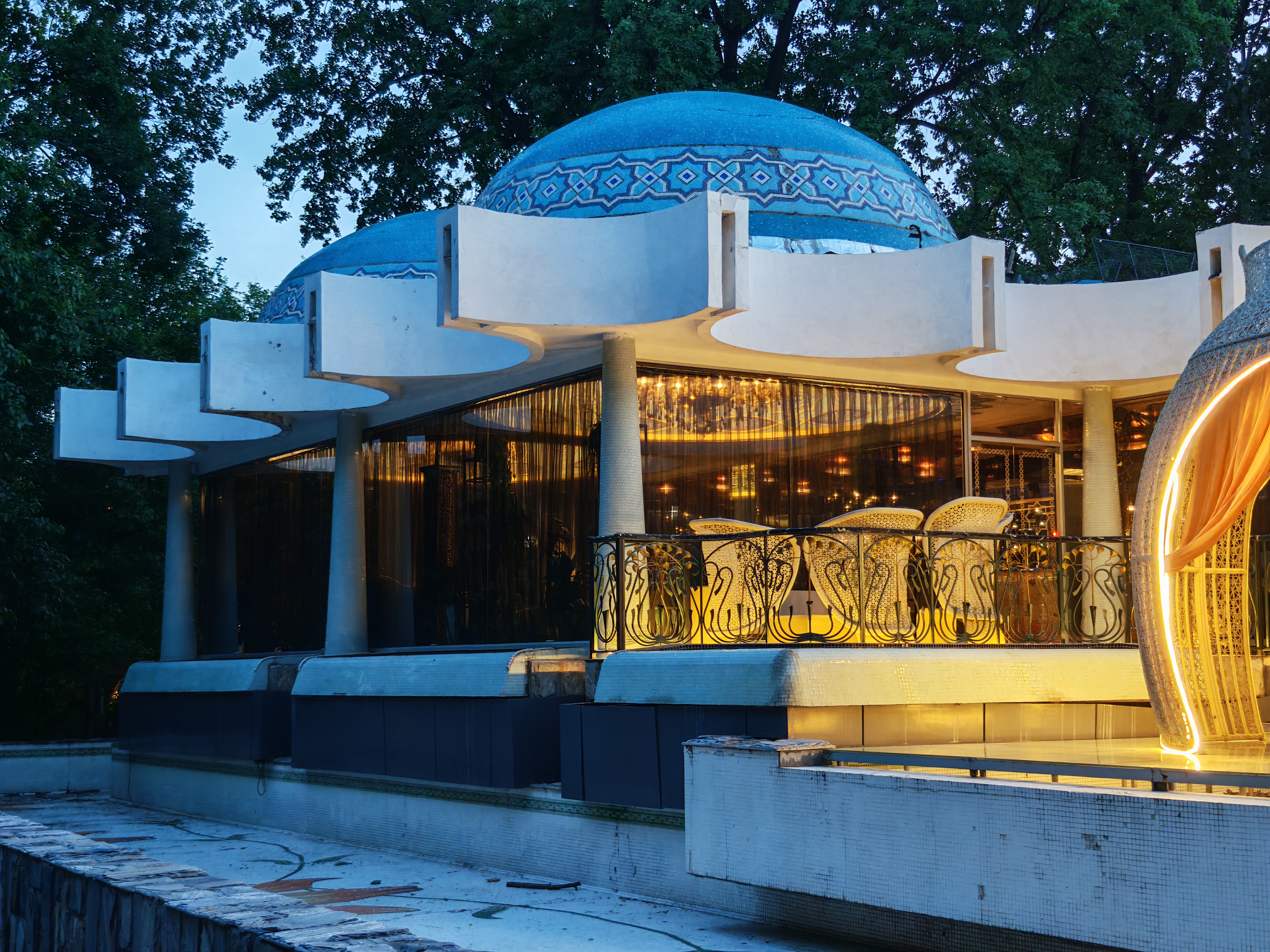
You are standing by the Zarafshon. This is Vilen Spivak's main work - in professional press he appears both as Vilen and as Vladimir Lazarevich. Yuri Miroshnichenko, who arrived in 1960 as a newcomer to the third studio of Tashgiprogor, which was then called the studio of Spivak and Rashchupkin, described him thus: a choleric, energetic, resilient, cheerful, rather mocking man. He avoided management, warmed the young people with attention, kept his distance, and did not pry into their souls. And he adds an unexpected detail: Spivak had a great artistic gift, and his architectural watercolors, soft in light and shadow, served as a model in the institute. In them, Miroshnichenko writes, there is "more soulful silence, warmth, sincerity" than in the bright watercolors of his colleagues. He painted old Bukhara, cotton landscapes, and monuments in Kizhi. He started with a bathhouse in Chilanzar, and colleagues would gently tease him about it all his life. His very first serious commission was the Chilanzar Shopping Center, and a specialist who was not yet thirty was appointed lead architect of the project. A story is connected with it that Yuri Miroshnichenko retells, explaining almost everything about Spivak. The team finished the master plan and a huge three-meter model, everyone leaned back in exhaustion, waiting for approval. "And suddenly Spivak rolls out a surprise: 'Everything is wrong, I have thought about it for a long time, the sales hall needs to be designed as a large volume, combining separate small retail buildings'". Rashchupkin, Miroshnichenko recalls, looked into his friend's eyes and found no spark of humor in them. A week was spent getting their nerves in order, then they dismantled the beautiful model and enlarged the building. That is how it was built, and that is how it stands to this day. The shopping center opened in 1964 and instantly became the most popular place in the city. On the very first day, about two thousand children's coats and dresses were sold there, and in the first five hours of the department store's operation - headwear for fifteen thousand rubles, shoes for sixteen, and toys for two and a half. Newspapers wrote that there was no such store not only in Uzbekistan, but also in other cities of the country. Then came the Zarafshon, and everything turned out to be harder with it. First, the team tried to simply increase the ready-made Alma-Ata project by one and a half times. The GlavAPU expertise cut it short: in Tashkent, this building will be unique and "must have its own face". Miroshnichenko summarized it shorter: "they expect a feat from us, they expect a masterpiece". Spivak and Rustem Memetov reworked the project for about a year, and the second version received a review of "excellent quality and detailing" from the same expertise. And further down the road, his path curiously diverges from his own words. In the mid-eighties, Spivak was asked which creative tasks he considered most important, and he answered: the creation of a Soviet style in architecture. Meanwhile, his own buildings went in the exact opposite direction. The 1964 shopping center is almost all-Soviet modernism with aluminum rustication of the facade. The 1974 Zarafshon is strict, Le Corbusier-style architecture. The twenty-story Moscow Hotel of the early eighties already features oriental decor. And after the collapse of the Union, at the end of his career, he built the conservatory, finally breaking with the modernist heritage. Four buildings - and four eras, each with its own language. He did not stop arguing at the end either. When in the late eighties a successful monolithic building began to be placed in projects at all key intersections, Spivak published a sharp article: "The history of standard panel construction has begun to repeat itself... A flood of one good building is not the path in urban planning". Two of his four main buildings no longer exist in their former form: the Zarafshon has been rebuilt, and the Chorsu Hotel was demolished in 2025. The shopping center in Chilanzar still stands.
AI translation · 🇬🇧 EN
Rate this review:
Nearby and related
By the same architect
Close by in Tashkent
About the Object
Vilen Lazarevich Spivak
Other
Ресторанный комплекс «Зарафшан», Ташкент
Historic Personality