
Bargello (Museo Nazionale del Bargello)
Всемирное наследие ЮНЕСКОAbout the Object
Unknown
1255
Gothic
Via del Proconsolo 4, Firenze
Museum
Gallery (1)

Town hall, prison, place of execution - and finally, a museum
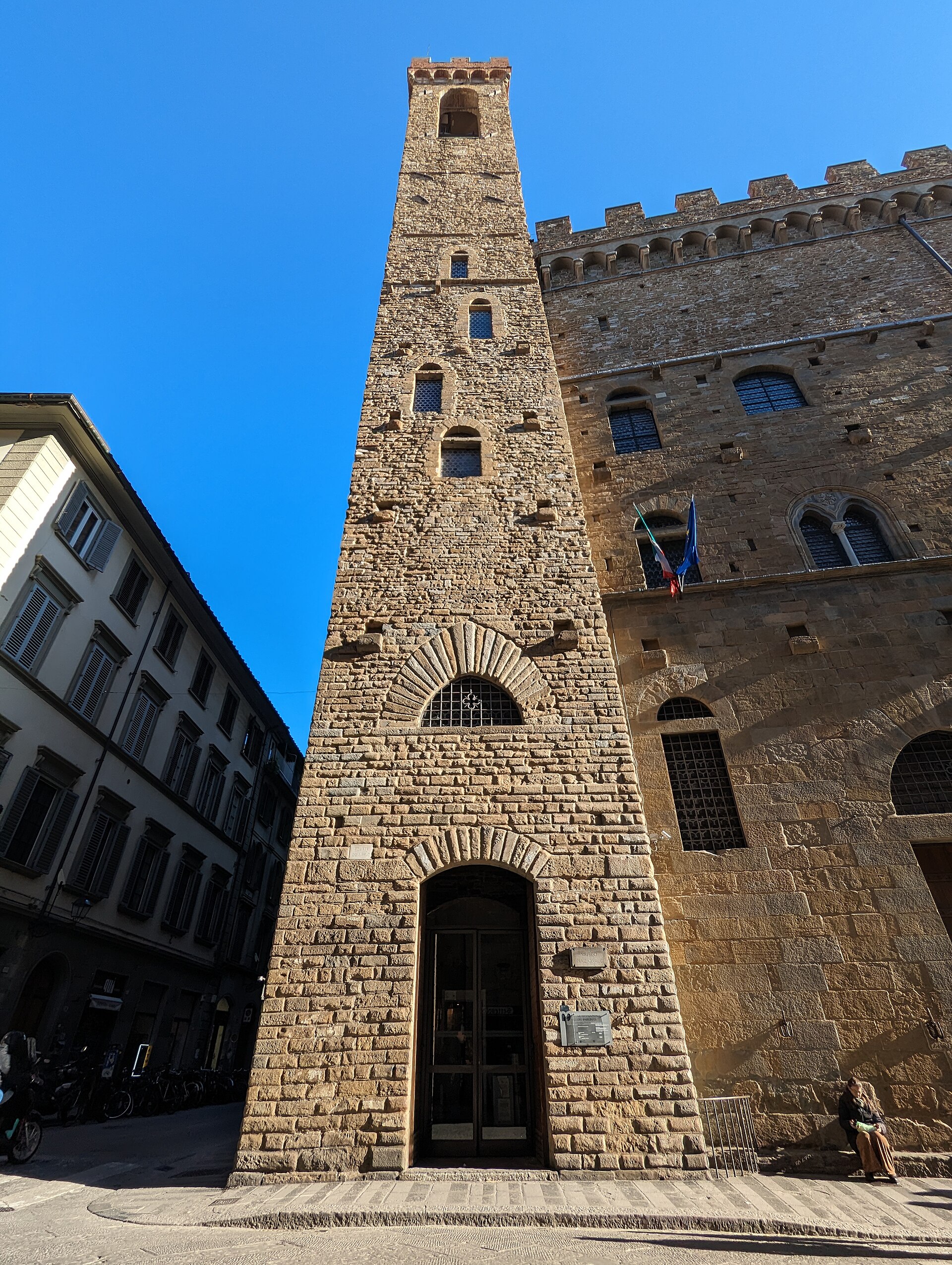
Museums often occupy buildings that were not built for them: the Louvre and the Hermitage were palaces, the Uffizi was an office. The Bargello has a darker biography. It was built in 1255 as the city town hall - this is the oldest surviving government building in Florence, almost half a century older than the Palazzo Vecchio, which was begun in 1299. At first, the Captain of the People lived and worked here - a military commander who was deliberately hired in Florence from another city so that he would not be tied to any of the city's factions. The logic is the same as for hired condottieri: a stranger will not play for the home team. In 1574, already under the rule of the Medici, the building received a new function: a police department, a prison, a place of torture and executions. The chief of police was called the bargello - and his name passed onto the house. Executions were carried out here until 1786. What they did to the building over three centuries: loggias were walled up, staircases were slapped together wherever necessary, large halls were divided into tiny cells. Even the chapel was divided into two floors - more cells were arranged upstairs, a warehouse downstairs. There were not enough rooms and toilets, the number of prisoners grew, and the house gained the reputation of the dirtiest place in the city. By the middle of the nineteenth century, interest in its own past rose in Florence, and the Bargello began to be saved. The police were removed from here in 1859, restoration began in 1861, and when Florence was briefly the capital of a united Italy from 1865, it was decided to finish the job and make a museum here - one of the first national museums in the country. So, standing in the courtyard with wide arches, it is worth keeping in mind both lives of this house: the one where power gathered, and the one where for over a hundred years people were held and executed.
AI translation · 🇬🇧 EN
Rate this review:
The first nude bronze since antiquity - and the mystery surrounding it
The Bargello is famous for its collection of decorative arts - carved ivory, medals, cameos, jewelry, textiles, glass, small bronzes - but you come here for the sculpture. Here are Donatello, Michelangelo, Verrocchio, Giambologna, Cellini. Here too is the original of Donatello's Saint George, a copy of which stands in the niche at Orsanmichele. The main masterpiece is Donatello's bronze "David with the Head of Goliath". This is the first free-standing, life-size nude bronze figure since Roman times. And around it lie continuous unknowns. Authorship is not contested. The date is debated: proposals range from the 1420s to the 1460s, generally converging on the 1440s. It is commonly said that the figure is inspired by antique statues of youthful heroes and athletes, but the exact prototype has still not been found; it is quite possible the model was a living boy - the figure is simply too unlike any classical ideal. The patron is most likely Cosimo de' Medici, but even this is not proven. One thing is firmly known: the first mention is from 1469, three years after Donatello's death, when a chronicler described a feast for the wedding of Cosimo's grandson, Lorenzo, and mentioned tables arranged in the courtyard of the Medici palace "around the beautiful column on which stands the bronze David." And there is something else that catches the eye, if one remembers the biblical text. Donatello did not depict any specific moment of the narrative. Nowhere is it said that David performed his feat undressed - yet in Donatello's work, he is nude. No one had done that before him.
AI translation · 🇬🇧 EN
Rate this review:
Nearby and related
By the same architect
Close by in Florence
About the Object
Unknown
1255
Gothic
Via del Proconsolo 4, Firenze
Museum